The American Spectator

home
ADVERTISEMENT
ADVERTISEMENT
The Largest Selection of Liberal-baiting Merchandise on the Net!
ADVERTISEMENT
ADVERTISEMENT
Print Email

At Large

Following the Afghan Drug Trail

Afghanistan, that most exotic of battlegrounds, is known for its fierce Islamic fighters, the Taliban, but internationally even more for the production of opium. According to reports of the United Nations Office of Drugs and Crimes (UNODC), about 90% of the world's heroin now comes from Afghanistan and Helmand province accounts for one-half to nearly two-thirds of that production. Nationwide approximately 2.3 million people are involved in poppy cultivation and processing, a tenth of the population.

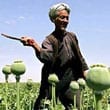
The impression has been created of a clandestinely grown crop of opium poppies in the hidden hills of southern Afghanistan. Instead, Helmand's desert-like land, irrigated by a major river, supports an agricultural industry that is over 100,000 hectares of well-cared-for fields separated by carefully drawn familial property lines.

The Taliban benefits two ways from the opium trade: First they tithe the poppy-producing farmers about 10% of the value of their crop. This is actually the traditional tax, called a zagat (or zakat), that in the past went to the tribal headman. Now it goes to the chief Taliban representative, who also might just happen to be the tribal headman, depending on his political disposition.

Secondarily the Taliban gains if there is government intercession in the "normality" of poppy harvesting. Unless an advantage is given to the farmer to produce something other than opium poppies, there is a substantial anti-government backlash benefiting the Taliban. The difference in return on poppy versus wheat production can run as high as four to ten times in favor of opium, depending on market factors. The opium-to-heroin processors are in a far better position than the government to offer "differentials" to encourage continued production.

When the government does mount a program to encourage substitute crops, such as wheat, the farmers pay local officials to allow them to hold back conversion on all but a small portion of their land. The local officials are "taken care of," the Taliban and headmen receive their zagat, and the government can report to the UN and NATO a drop in poppy acreage.

It doesn't take a vast intelligence operation to determine the Taliban and local officials have close ties. It's in both their interests to keep the farmers producing. It's also important for the smugglers to have a protected source of supply. They, too, pay off both the Taliban and local police. It is the ultimate socioeconomic and, in a certain sense, political symbiosis.

Last year the American command offered to bring in crop sprayers to eradicate the extensive poppy fields in the south. This brought an uproar all the way back to the presidential palace in Kabul. The British military, which is responsible for Helmand, put up the logical argument that its entire effort to win the cooperation of the local tribesmen would be destroyed -- along with that year's cash crop.

Even if the farmers could be encouraged to replant with wheat and other non-offensive products, an entire crop year would be lost and the British would be blamed by the Taliban political operators. Another grand idea born in fertile Washington minds was shelved just in time.

The product moves down the line by donkey, motorbike, truck, and numerous colorful horse-drawn carts. Organized armed smuggling teams operate through Pakistan and southern Iran's shared Baluchi tribal territory. Others head northward, crossing through Iran and the central Asia nations to the Caspian and onward to Turkey, thence Europe and the Americas. Some smugglers travel eastward to supply markets in south Asia and even those Asian markets formerly served by the once powerful "golden triangle."

The overall business is calculated to be worth in excess of $4 billion at point of entry of neighboring transit countries. Of this the gross income to farmers is estimated at $732 million for 2008. This means tens of millions of dollars go to the Taliban and other payoffs before the smugglers even become involved.

Drugs have been a traditional Afghan commerce for centuries, and that is not going to change very much because Washington, London, and the United Nations want it. The Taliban, though, could do the job -- if they really wanted to do it. But that would cut off a major source of their funding, as it would for many tribal leaders, government officials and police.

The commitment to fight the war in Afghanistan is going to take far more than a troop increase!

Letter to the Editor

topics:
Afghanistan, Opium-Heroin Production

George H. Wittman is a member of the Committee on the Present Danger and the founding chairman of the National Institute for Public Policy.

Comments

Stuart Koehl| 1.23.09 @ 9:09AM

I have long advocated a policy of buying out the poppy farmers, paying them a high premium over the market price for their crop. In this way, we can drive the Taliban broke trying to compete, while at the same time giving Afghan farmers the opportunity to get into another line of business.

Following the example of the USDA, we would pay Afghan poppy farmers anything up to twice the market value of their crop NOT to grow poppies. They would not have to let the land lie fallow, but could grow other crops (saffron is turning out to be a popular cash crop that pays more than poppies). This would cost us a fraction of the cost of "eradication", and we should be prepared to keep it up for a decade or more, until a new agricultural economy emerges in Afghanistan.

Of course, this is concomitant upon Coalition and Afghan forces providing security for farmers against Taliban retaliation (though in the long run, such retaliation is counterproductive for them). We must also ensure that the money paid out to the farmers stays with the farmers, and is not siphoned off by government graft, Taliban tax collectors, or local warlords on the make. But, overall, this approach has the potential to cut the legs out from under the Taliban's money machine.

Scot| 1.23.09 @ 9:58AM

Your ideas success rest in the ability to keep the Taliban from taxing the subsidies. Otherwise your talking about doubling the tax revenues of the Taliban in US tax payer dollars. Not a good idea.

Tom| 1.23.09 @ 10:04AM

The only solution to take away the Taliban's illegal drug profits is to legalize and regulate drugs. Remember how we took away illegal alcohol profits from gangsters like Al Capone almost exactly 75 years ago when we ended prohibition?

http://www.WeCanDoItAgain.com

Stuart Koehl| 1.23.09 @ 12:20PM

"Remember how we took away illegal alcohol profits from gangsters like Al Capone almost exactly 75 years ago when we ended prohibition?"

And yet, the mob never entirely went away, did it?

Stuart Koehl| 1.23.09 @ 12:23PM

"Your ideas success rest in the ability to keep the Taliban from taxing the subsidies. Otherwise your talking about doubling the tax revenues of the Taliban in US tax payer dollars. Not a good idea."

Yes, I noted that. I believe this is something attainable, using proper counter-insurgency tactics. Moreover, by putting money in the pocket of the Afghan farmer, my proposal turns him from a willing collaborator with the Taliban (who provide him with his only source of income) to a sullen victim of Taliban extortion. If "guerrillas are the fish, and the people are the sea", this proposal has the potential to make the sea toxic for the insurgents, just as al Qaeda overreach in Anbar Province poisoned the water for them in Iraq.

Dick Scott| 1.23.09 @ 1:31PM

The farmers of central Helmand on the largest irrigation system in the country (mostly US funded between 1946-79)produce much if not most of the country's opium. But they also cultivate their traditional cash crops of cotton, peanuts, melons, vegetables etc and have continued to ask for help with the marketing of these crops (since 1998) as an alternative to get out of opium which they all consider an "evil" crop. Their appeals have largely fell on deaf ears, so they continue to cultivate opium. This year they will cultivate more wheat to replace opium because of the explosion of wheat prices due to shortages and the reduction in opium prices thanks to overproduction.In '02 we reduced opium production by 85% in one crop year with a program of: dialogue with a very cooperative local government and farmers, reconstruction work on the irrigation system putting 3-5000 men to work per day(the very large farm labor pool), some limited support for the local cotton gin that is the primary market, all of which resulted in hope for the future. No one, not the "Taliban" or local or central governments, past and present, have complete control of these cash- crop, double-crop Pashtun farmers. Through mis-direction, delayed funding and bureaucratic bungling we failed to continue the relatively successful '02 reconstruction/opium control program. In this region we should attempt to re-start a similar effort, which would also include some of the young unemployed farm labor force that have become "Taliban"...and we must stop killing people by accident or on purpose. We are only making more permanent enemies. To start: TALK.

The Revelation of Life| 1.23.09 @ 3:28PM

The BLACK NOBILITY. (G.O.D) Gold, Oil, Drugs.

The BUSH family made their money in Oil & Drugs. Queen Victoria made her money in DRUGS. The Rothchilds made their money in all three Gold Oil and Drugs.

The De Rothchilds own 50% of the worlds wealth.

How does Drugs arrive on the streets of America, and the streets of Europe? it's not the drug dealers they own no ships or planes.

The poor look up to the rich, but lack the intellegence to ask the question how are these people rich and I am poor. The rich have no moralities, nor any sympathy for the poor, the poor are the victims of the rich.

The rich are the maggots that lives on the back of the infested diseased poor. And smart enough to fool the middle classes out of their money on the pretex that the money they donate to their funds, like the WWF is to protect, far from the facts it's to use the fools money to fund their project to kill and destroy.

It's the law of the JUNGLE the strong live off the back of the week.

Michele San Pietro| 1.23.09 @ 3:36PM

The cancer has to be excised in Afghanistan. There is no alternative to totally defeating the murderous, scandalous, and backward Talebans.

Tom| 1.23.09 @ 3:49PM

Stuart, you note that " And yet, the mob never entirely went away, did it? "

Precisely because they've been able to finance a large share of their enterprise with illegal drug sales, silly! Take away the prohibition and the profits now!

Will| 1.23.09 @ 3:55PM

Bush family made their money in drugs? An accurate statement would have been to say the Bush's made their money in oil & the Kennedy's in bootlegging.
And The De Rothchilds do not own 50% of the worlds wealth! Start with the facts genius.

Michele San Pietro| 1.24.09 @ 3:47PM

The Bush family is one of the most honest and glorious in history who is continuously libelled by sheer scoundrels.

RightofRush| 1.25.09 @ 9:20PM

More assests than you can imagine can be hidden in dummy corporations in small countries and in Swiss vaults.
As for Bush, Inc., consider two things:
1. The abysmal failure of the "War of Drugs".
2. If you were an ex-CIA chief with international drug cartels,(remember Air America?) wouldn't it be really neat to sons governors of Texas and Florida?

RightofRush| 1.25.09 @ 9:27PM

Whoops! That's : ...really neat to have...
An after thought: "The Relevation of Life" has it spot on, although he did understate the situation.

lkjlkklj| 11.18.09 @ 8:05PM

Mac TOD Converter,
TOD Converter for Windows

Leave a Comment

Related Articles

ADVERTISEMENT

In Sum, IPCC Discredited

Paul Chesser

* * * *

That Dangerous Radical . . . Marvin Olasky?

Robert Stacy McCain

* * * *

Forget the Committees

Greg Scandlen

* * * *

Reid Disses David Broder

Philip Klein

* * * *

Moment of Truth

W. James Antle, III

* * * *

No Sales Days in the Afghan War

George H. Wittman

* * * *

Bureaucrats With Badges

Mark Hyman

* * * *

Obama in Wonderland

Ken Blackwell

* * * *

A Writer Speaks

William Tucker

* * * *

What Has Changed?

Robert P. Kirchhoefer

* * * *

High Stakes

Manon McKinnon

* * * *
ADVERTISEMENT