

George F. Will, Ken Adelman, Frank Fukuyama, David Brooks — these are just a few names on the list of eminent experts who have declared that Sarah Palin is what’s wrong with the Republican Party.
Even if we were to add all their prestigious names to the list, however, it wouldn’t be nearly as long as the line of people who stood in the cold wind of Pennsylvania to see Palin this week.
The line outside the Heiges Field House at Shippensburg University was already growing long by noon, more than two hours before the doors opened for a Tuesday rally that wasn’t scheduled to start until 5 p.m. And two hours after the doors opened, the line still stretched down the sidewalk, around the Luhrs Performing Arts Center, all the way along Cumberland Drive past the baseball field and uphill to Grove Stadium.
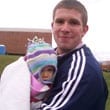
Dressed in parkas or hooded sweatshirts, wearing toboggans or wrapped in blankets, they withstood an 18-mph October wind as the late afternoon turned to evening and the temperature dipped toward freezing. One tall young man held his tiny infant daughter snuggled up inside his coat. “She’s all right,” he said. “She’s a Republican.”
The Secret Service passed them through the metal detectors with brisk efficiency, but the line was so long that hundreds were left waiting outside in the cold when the rally began. Inside, thousands cheered wildly when Palin took the stage with her husband, Todd. She took her place at the lectern and tried to start her speech, but the screaming audience wouldn’t let her until they’d screamed for another full minute.
None of her critics in the commentariat could ever draw such a crowd or generate such enthusiasm, and yet they do not hesitate to proclaim that she is “not close to being acceptable in high office” (Adelman), that her selection as John McCain’s running mate is “irresponsible” (Fukuyama) and even that she “represents a fatal cancer to the Republican Party” (Brooks).
Popularity as a pathology? What Brooks and the others are saying is that these people who spend hours in the cold October wind for a chance to see Sarah Palin are too stupid to know what’s good for them. “Listen to us,” say the political experts.
YES, THE EXPERTS always know best. In September 2002, Will advocated “preemptive” war with Iraq, with a nuclear “mushroom cloud” as the alternative. Now, he denounces as “carelessness” the war he once urged, lumping Palin into the same category of Republican error.
Fukuyama militated for war with Iraq much earlier, signing onto the Project for the New American Century’s 1998 letter to President Clinton calling for “a strategy for removing Saddam’s regime from power.” In the run-up to the 2003 invasion, Brooks warned that “the fog of peace” was blinding critics to the “menace” of Saddam. Among the advocates of invasion, Adelman took the cake, so to speak, by predicting a “cakewalk” in Iraq.
Experts, you see. And at nothing are they more expert than evading responsibility, a task that requires scapegoats. So the unpopularity of the Republican Party has nothing to do with the policies the experts urged and the politicians the experts supported. Rather, it’s the provincial hockey mom who is to blame.
“Cakewalk Ken” and Fukuyama have now declared their support for Obama, citing Palin prominently among their reasons. Brooks and Will have not (yet) declared themselves acolytes of Hope, but have made clear that they view Palin as an unalloyed dead weight on the GOP.
Experts in Washington think themselves infinitely more important to the Republican Party than mere voters in Pennsylvania who stand in line to see the Alaska hockey mom who sent her oldest son to fight the war the experts once urged.
Our Republican experts don’t fight wars or send their sons to fight them. They don’t make hand-lettered signs and drive 50 miles to wait in the October wind for the chance to wave their signs inside an arena in Cumberland County, Pa. The experts don’t seem to care about facts.
AMONG THE FACTS the experts ignore is that the Republican Party was in deep political trouble long before John McCain picked Sarah Palin as his running mate. The total popular vote in the Democratic primaries (36 million) was 70 percent larger than in the GOP primaries (21 million), and McCain’s 9.9 million primary votes represented just 47 percent of the Republican total.
On Aug. 29, when Palin was announced in Columbus, Ohio, the Gallup daily tracking poll showed Obama with an 8-point lead. Twelve days later, the GOP ticket had surged ahead by 5 points.
Weeks before any of the Republican experts endorsed Obama, I declared that McCain was doomed to defeat by his support of the $700 billion bailout. As of Thursday, however, Gallup showed the Republicans trailing by a slender three points and the faithful were still praying for an Election Day miracle.
The experts don’t believe in miracles, but they do believe in polls, and they were no doubt struck dumb Thursday when an NBC poll showed Obama’s lead in Pennsylvania to be exactly equal to the survey’s 4-point margin of error.
If somehow Team Maverick pulls off a historic upset, those thousands who turned out to see Palin in Pennsylvania will be a big part of that history. Win or lose, the future of the Republican Party depends on generating the kind of excitement among ordinary Americans that Palin has produced ever since her name first flashed on the Drudge Report in late August.
The Republican Party won’t notice the defection of a few experts in Washington, but the GOP can’t exist without all those people who love Sarah Palin in Pennsylvania and Ohio and Florida. Republicans would be wise to pay more attention to the people, and less to the experts.