
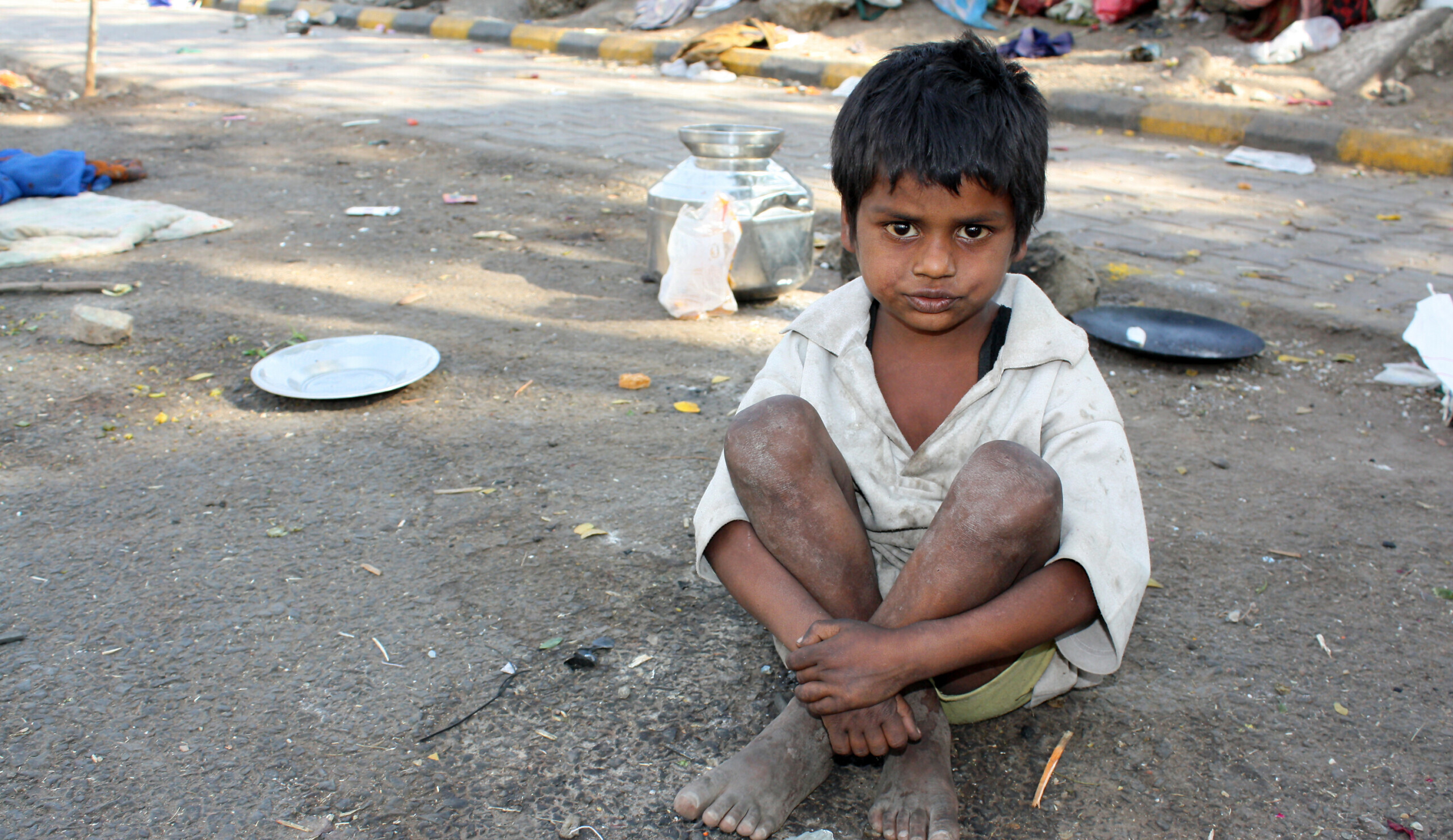


Some people claim they don’t exist. Others want to ignore them. In reality, there are thousands of kidnapped children forced to beg each day from sunrise to sunset for their gang masters’ profits in India.
Who is the Beggar Mafia?
In 2008, the movie Slumdog Millionaire stunned the world with its portrayal of the “Beggar Mafia” in India. The film was marketed as a “feel-good” flick, but also served to expose the plight of children forced into service of the beggar mafia. The movie was nominated for 10 Oscars and won four Golden Globes, but has been largely forgotten.
The “Beggar Mafia” operates across all major cities in India, where it kidnaps young children, even stealing newborns from hospitals, to raise and train them to beg on the streets. The money the children collect is then forcibly taken and put into the pockets of the leaders of criminal gangs. It’s an extremely lucrative business, with yearly profits estimated at 1.8 crore, equal to $215,499.
Police statistics put the number of abducted children in India at 44,000 per year, but other sources have put the number as high as one million. There are 18 million “street children” in India, the highest number of any country in the world.
After their abduction, children are often forcibly made into addicts, to drugs, alcohol, or both, while the gang masters control their supply to ensure compliance and obedience. Other tactics used by gangs to control the children include torture, beatings, and starvation. When the children are no longer useful, or become too ill to even beg, they are abandoned and left to die.
The beggar mafias often maim the children as well to garner more sympathy from passersby so that the children earn more money. The maiming can include (but is not limited to) disfigurement with acid, the closure of veins with stitches to bring about gangrene, and forced amputation of healthy limbs.
The sole purpose of this barbarity? To elicit sympathy from people so that more money is offered to the beggars and therefore ends up in the pockets of the beggar mafia masters.
Critics
Some critics branded the film Slumdog Millionaire as “poverty porn,” claiming it unfairly displayed the poverty-stricken side of India, which has worked hard to portray itself as an economic superpower. Some have also said that because India is, as they claim, a modern economic superpower, the barbarities shown in the film were outdated and provided a backward look at a part of the country that doesn’t exist anymore.
The film aside, some have flat-out claimed beggar mafias don’t exist at all, but that they are “McDonaldised” myths conjured up by the middle class out of entitlement and a need for moral superiority over a lesser class.
Still others, including the Indian government, lean toward ignoring the problem altogether because of the country’s desire to be seen as an economic superpower. Beggar mafias and street children don’t support that image.
Indian Election and Government Response
Complaints to the Indian police are often futile. At least one-fourth of the children abducted are never recovered and police are also often in the pockets of the beggar mafia. “There is collusion between lawmakers and lawbreakers,” child rights activist Swami Agnivesh says. (READ MORE: INDIA’S ONTOLOGICAL QUESTION: REGIONAL OR GLOBAL)
The most recent elections in India, resulting in Prime Minister Narendra Modi’s election for a third consecutive term and also resulting in his party’s loss of the majority in the Lok Sabha, do not bode well for the economy in India. Their stock market suffered its biggest crash since 2020 and concerns have been raised about Modi’s ability to continue his pro-business agenda.
Though one of the fastest growing in the world, India’s expanding economy has been unable to reach the enslaved beggars and most destitute citizens, a trend that will undoubtedly continue after the most recent election. There is also a shocking deficit in the number of quality jobs to match the large population in which economic inequality and corruption, as seen with the police and the beggar mafias, are growing.
Modi’s third term will likely be accompanied by compromise and changes in economic policies, for good or for ill, because of the loss of the parliamentary majority. Nevertheless, it is unlikely that the beggar children will find relief from the political changes and will continue to be India’s invisible citizens, forgotten by all for the sake of a “superpower-level” economy.



















