
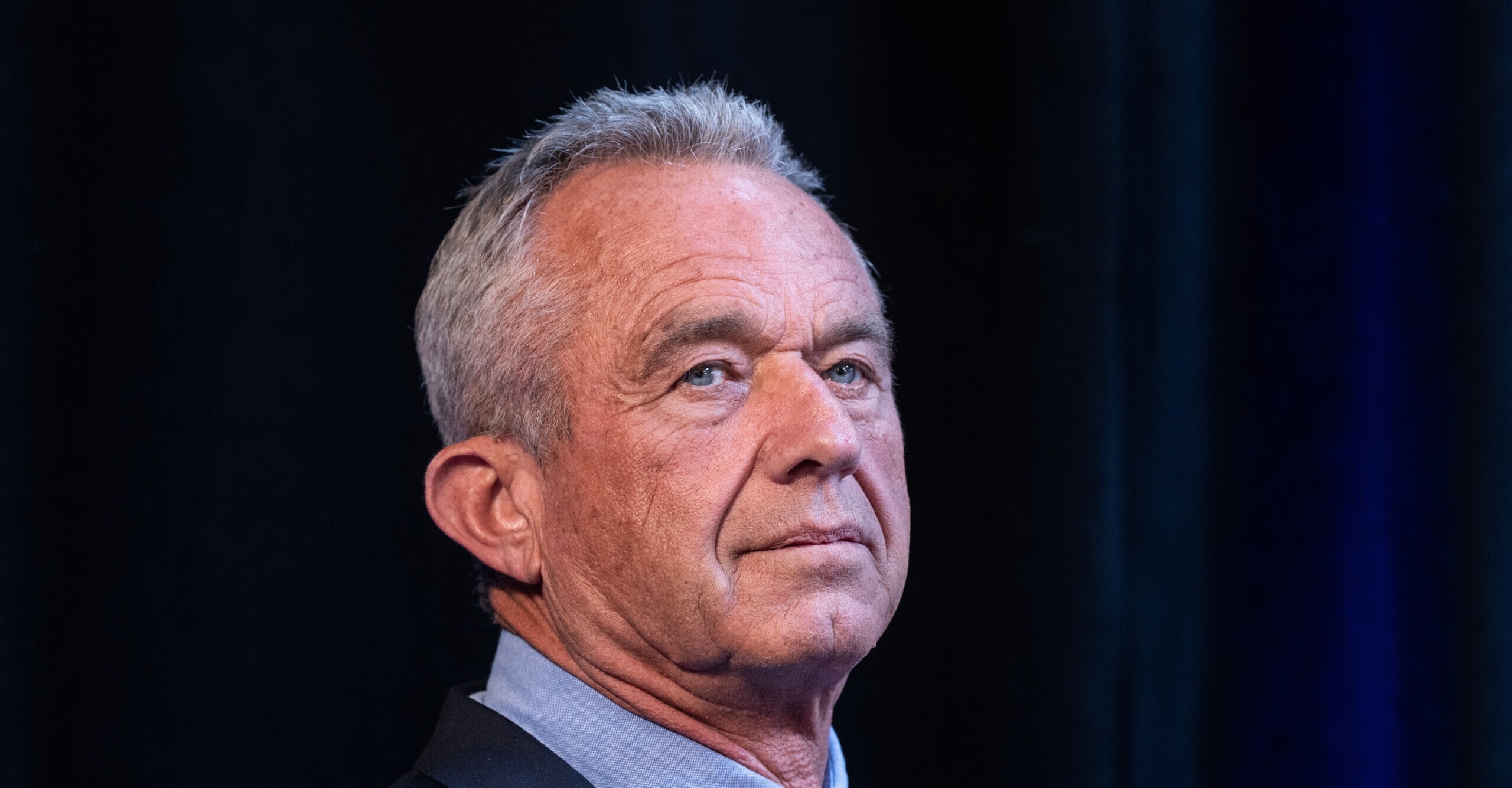


This week, as the confirmation battle over the Trump nomination of Robert F. Kennedy Jr. to be secretary of Health and Human Services peaks, as the saying goes: like father, like son.
As someone whose teenage political hero in the 1960s was then-New York Senator and Democrat presidential candidate Robert F. Kennedy, the opposition today to RFK’s namesake son, Robert F. Kennedy Jr., is amusing.
As someone around at the time, the recollections now of the political attacks on RFK Sr. are still vivid.
The central charge around which everything else gathered was that RFK Sr. was “ruthless.” In essence, his zeal to elect his older brother Jack to the presidency, then to serve him as an activist attorney general in times of tumultuous upheaval that was embodied first by the civil rights movement focused on de-segregating the American South, then, as a Senator, protesting and fighting a president of his own Democrat Party — Lyndon Johnson — to end the Vietnam War, revealed RFK Sr. to be relentlessly focused. He had his goals and he was committed to them.
Back in the day, these causes appeared gradually, driven by events that in fact had nothing to do with him. The demand by African Americans for the recognition of full equality had finally burst full-blown on the American political scene, something that had begun before RFK became attorney general.
With the rise of television, the nation was mesmerized and appalled by television images during the Kennedy administration of peacefully protesting blacks in Birmingham, Ala. having the local authorities turn on them with fire hoses while also literally having them set upon by police dogs.
They were riveted as Kennedy himself sent his deputy attorney general, Nicholas Katzenbach, to get two young black students admitted as they attempted to enroll in the heretofore segregated University of Alabama. With Alabama Governor George Wallace literally standing in the university’s doorway, Katzenbach was supported by and accompanied by a National Guard unit federalized with the support of RFK. Eventually, RFK won out and the University was desegregated.
And when he died, assassinated the night he won the California Democratic presidential primary, brother Ted eulogized Bobby Kennedy at his funeral by, in part quoting from RFK’s landmark speech to students in the then-apartheid segregated South Africa:
Some believe there is nothing one man or one woman can do against the enormous array of the world’s ills. Yet many of the world’s great movements, of thought and action, have flowed from the work of a single man. A young monk began the Protestant reformation; a young general extended an empire from Macedonia to the borders of the earth; a young woman reclaimed the territory of France; and it was a young Italian explorer who discovered the New World, and the 32 year-old Thomas Jefferson who [pro]claimed that “all men are created equal.”
These men moved the world, and so can we all. Few will have the greatness to bend history itself, but each of us can work to change a small portion of events, and in the total of all those acts will be written the history of this generation. Each time a man stands up for an ideal, or acts to improve the lot of others, or strikes out against injustice, he sends forth a tiny ripple of hope, and crossing each other from a million different centers of energy and daring, those ripples build a current that can sweep down the mightiest walls of oppression and resistance.
Few are willing to brave the disapproval of their fellows, the censure of their colleagues, the wrath of their society. Moral courage is a rarer commodity than bravery in battle or great intelligence. Yet it is the one essential, vital quality for those who seek to change a world that yields most painfully to change.
In today’s political world, RFK’s namesake son is exactly living up to the high standards his father repeatedly displayed. And predictably, as with his father, he has become a figure of controversy.
This week, as he approaches the televised drama of his Senate confirmation to be President Trump’s secretary of Health and Human Services, RFK Jr. is indeed following his father’s example. As with his father, who frequently enraged the Establishment of his day, RFK Jr. faces disagreement over his views on the issues of today. And he doesn’t back down.
Those issues focus on a drive to “Make America Healthy Again”, and revolve around a host of health-related issues that RFK Jr. sees as “igniting a health revolution in America.”
They include:
- The Chronic Disease Epidemic
- Regenerative Agriculture
- Habitat Preservation
- Combatting Corporate Corruption
- Removing Toxins from the Environment
So buckle in as RFK Jr. engages Senators representing the body of Congress where his father and both Kennedy uncles once served.
And make no mistake about two things.
In his drive to pursue a “vision for a healthier America,” RFK Jr. is both his own man — and his father’s son.
A good thing on both counts.
READ MORE from Jeffrey Lord:




















