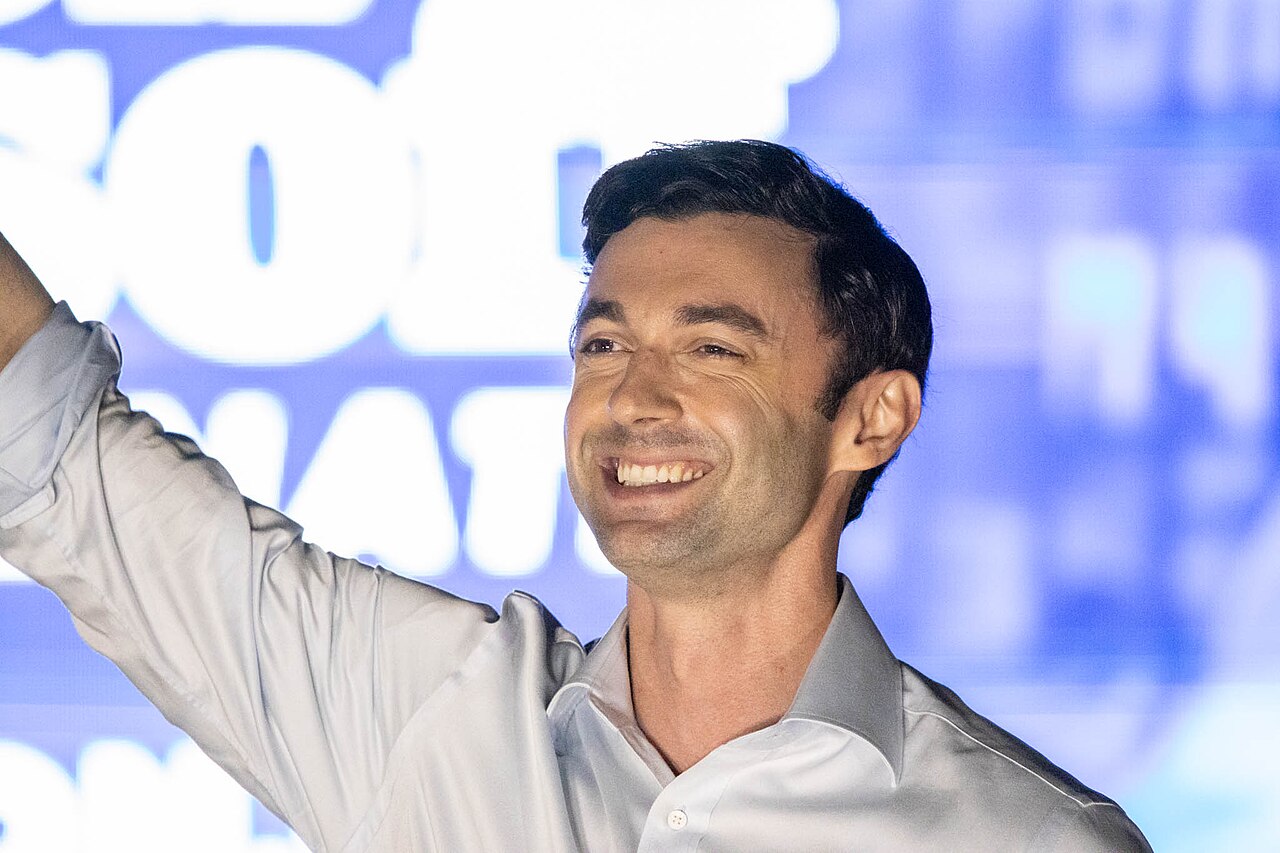


Gone is the day when elderly statesmen govern. Here is the day when eligible bachelors rule.
In recent years, there has been an increase in candidates marketing themselves as “dateable.” Leaning into their attractiveness (and singleness), these politicians have ridden the social media wave to the forefront of election discourse. See John F. Kennedy’s grandson, Jack Schlossberg, who just recently lost his congressional primary race but won adoring media coverage, and Beau Bayh, fighting to be elected Indiana’s Secretary of State.
Boyfriends We Deserve is a social media account that promotes and endorses attractive liberal politicians. Although self-labeled as a parody account, it’s operated by Democratic strategist Monica Venzke, whose goal is to make hot male Democrat candidates appealing to women. She told USA Today she wants to “make it sexy to be a Democrat again.”
I have never checked out a single person more https://t.co/TEVIi2T4zO pic.twitter.com/L4tfL8cxuh
— Boyfriends We Deserve (@BFsWeDeserve) June 25, 2026
This conversation is also front of mind after the win of New York City Mayor Zohran Mamdani, who soared to victory on the wings of marketing his hipness and youth, and as everyone expects California governor Gavin Newsom, whom Vogue called “embarrassingly handsome” earlier this year, to run for president. (RELATED: Newsom Practically Demands to Be the Democratic Candidate)
Good looks and a fun social media persona trump wisdom as the criteria for a desirable politician.
Many Americans now consider potential political leaders as they would options on a dating app and not as competent elected officials. X posts with hundreds of thousands of views rank the attractiveness of each congressman in a tier list. Popular Instagram reels make fun of this trend, like this video by user @ericsaymore, which mocks a generic Democratic candidate shamelessly asking for votes because “he’s YOUNG.” The comments (“the accuracy,” “Jack Schlossberg moment”) reveal people are catching on.
Of course, to some degree, it has always been this way. Going as far back as 2007 — before the social media boom — a Princeton study found that “a split-second glance at two candidates’ faces is often enough to determine which one will win an election.” First impressions have always played a huge part in how humans make decisions, and beauty has always played a huge part in our first impressions. No one is going to contend that man is a perfectly rational creature.
However, there is no doubt that social media has exacerbated our worst tendencies.
This latest surge of young, attractive political candidates — particularly Democratic ones — leaning into their dateability is just the most recent manifestation of what Neil Postman warned us about 40 years ago: the medium is the message. As we move farther away from what Postman called “word-centered culture” to an “image-centered culture,” good looks and a fun social media persona trump wisdom as the criteria for a desirable politician.
Before the digital age, Postman wrote, “Public figures were known largely by their written words … not by their looks or even their oratory. It is quite likely that most of the first fifteen presidents of the United States would not have been recognized had they passed the average citizen in the street.”
Famously, JFK was elected president over Richard Nixon in 1960 after the first-ever series of televised presidential debates. Kennedy’s young, tan visage appealed to viewers much more than Nixon’s pale, sickly complexion. The Democrats were the first to capitalize on this human weakness in the electorate, and recent campaigns show they have continued to target this failing in the social media age.
Now, we picture images of public figures and do not call to mind the things they have written. We are inundated with visuals of potential and actual politicians, and we spend more time watching clips of them than we do reading their policy positions — if they have even published such things. This is a problem, Postman said, because the written word reveals a person’s ability to rule far more than their physical attributes.
Clavicular would not have been possible before social media — neither his ideology nor his popularity. The looksmaxxers may induce our pity, our disgust, or simply our bewilderment, but they are a symptom of a societal problem: we are way too obsessed with physical beauty. This obsession drives up anxiety rates, feeds narcissism, and could cause us to have pretty but incompetent rulers. (RELATED: The Spectacle Ep. 401: Men and Women Both Suck: The Woes of ‘Looksmaxxing’)
Humans aren’t built for caring about our looks this much, nor is a republic meant to be governed solely by beauty pageant winners.
Drawing upon Plato, Roger Scruton argues in Beauty: A Very Short Introduction that we must be careful to treat humans as persons and not merely bodies. True beauty is the beauty of an embodied, relational soul and not “an assemblage of body parts.”
While certainly important for lovers to remember, it’s also critical for voters to keep in mind. Politics ought to be very personal. The constituent-to-representative relationship must be one where both sides listen to one another. Thus, the ethos, not the mere aesthetics, of a candidate is the thing under consideration.
How can we fight this destructive worldview? First, by reducing time on social media, which encourages us to overemphasize physical beauty. Second, as a society, we must return to reading fairy tales and heeding their lessons.
I know that sounds cheesy, but hear me out.
The father of conservatism, Edmund Burke, argued that each person possesses a moral imagination that furnishes their worldview. This moral imagination forms our ethical sense of the world that allows us to understand events and make decisions. Russell Kirk, building upon Burke, contends that literature is the primary way that the moral imagination is shaped.
Fairy tales have long been instrumental in building up a strong moral imagination — particularly in children. How many classic fairy tales teach us the lesson that apparent physical beauty is not to be valued over the quality of character? Cinderella, Beauty and the Beast, and The Princess and the Frog contain this lesson. In fact, these stories instruct us that true beauty, as Scruton reminded us, is not purely external.
This is a basic lesson we once knew, but apparently we need to learn it again. The best way to learn this lesson is to catechize our children with fairy tales. Hence the title of C.S. Lewis’s famous essay “Sometimes Fairy Stories May Say Best What’s to be Said.”
Along with fairy tales, our culture could use a heavy helping of biblical stories. Saul is described in 1 Samuel as tall, dark, and handsome. Ok, maybe not dark, but he is called tall and handsome. However, he was also proud, and a poor king. David, the least in appearance of all his brothers, is the man after God’s own heart.
When we elect politicians in the mold of King Saul, we have lost the plot.
Television changed politics and societal discourse forever. Social media has now done the same to an ever greater degree. If our democracy is to produce the kind of people up to the task of governing America, the people of this country must return to that ancient font of wisdom, fairy tales, and drink deeply.
READ MORE:
The Spectacle Ep. 401: Men and Women Both Suck: The Woes of ‘Looksmaxxing’
Newsom Practically Demands to Be the Democratic Candidate
Cooper Cobbs is a 2026 Chesterton Media Fellow at New Guard Press. A rising junior at Patrick Henry College, he is the incoming student body president and will be the editor-in-chief of PHC’s student newspaper, the Herald, this fall. Follow Cooper on X at @CobbsCooper.
Image licensed under Attribution 2.0 Generic.