
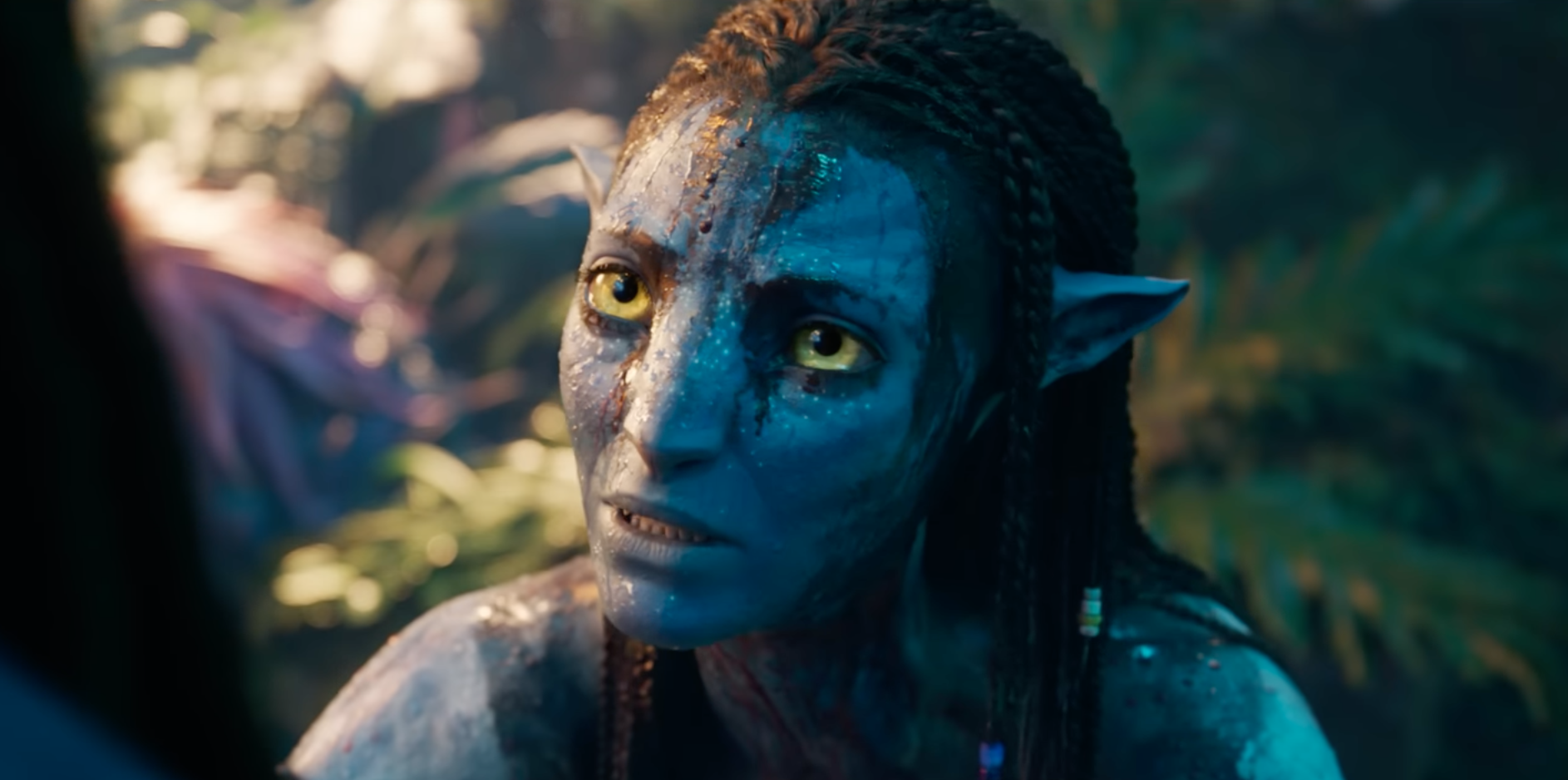


It’s unthinkable that a director might come along in 30 years and remake James Cameron’s Avatar saga. Visually, these films are unmatched. I’ve never seen anything like them. The precision of detail, the luminescence of Pandora, and the beautiful intricacies of its jungles, creatures, and peoples all captivate and dazzle. But future generations might look back on the monumental achievement of CGI glory and wonder how a director can conjure such marvels and entirely forget to tell an interesting story. Someone might actually want to remake Avatar for the very sake of offering a cogent and gripping narrative. Avatar is sadly becoming a parody of itself.
After watching Avatar: Fire and Ash, I left the theater puzzled, as if I was back in 2009 when the first blockbuster stormed cinemas and raked in its hordes of gold. I felt as though I had watched almost the exact same movie as the original. Maybe this new film had been rehashed a little and flavored with some additional characters, but essentially it resembles the same plot structure: Invasive humans are gutting a rich and fertile planet for its valuable natural resources. The native people don’t like that, and neither does Jake Sully, a Marine-turned-avatar who now champions the indigenous people in their endeavor to protect the world they love. Ultimately, though, they can do no such thing, because they have bows and arrows and the white people have flying tanks. But it’s okay, because Eywa, a mysterious goddess, possesses the planet’s sentient animals when it matters the most and uses them to send the scummy humans packing. I’ve just described the first three movies. Fear not, though, for two more twin Avatar films are brewing in the studio. You may have to wait another half a decade to catch them at the theater, but Cameron needs more than a trilogy. He needs five honest shots to tell the same story again and again. Nonetheless, I no longer anticipate any variation in form or content in these future movies. I’ve been thoroughly warned.
Avatar is itself a procession of remakes. The original architects of the series are stuck in narrative loops. The story doesn’t develop much over time. It repeats, regurgitates, and finally, infuriates. The cultural critic Ted Gioia wrote something to this effect recently on his Substack publication, The Honest Broker. Gioia argues that our culture is stale and can only occasionally stimulate itself with artifacts we’ve all seen before. Gioia writes,
In a world without complexity or resistance, nothing ever changes. Most movies, music, books feel like stagnant rehashes of the same formulas. And that’s intentional. For the first time in history, fashions don’t change. We don’t change.
Hollywood is still bent on its remakes and is enjoying a long fling with biopics of iconic musicians. Likewise, James Cameron is still intent on telling the story of Avatar, and he deserves a lot of credit for his decades-long toil. His movies are remarkable beauties to behold. They are visual miracles. And yet, their endings feel far too predictable, and their plots are set up in such a way that make us question why we’re doing this again; first in 2009, again in 2022, and again in 2025. The first movie might have been a redressed Pocahontas movie, but it still wowed the world and left audiences interested to see more of Pandora. Instead, the sequels have so far turned out to be slightly rearranged dishes of the same fare. It might look beautiful, but it still tastes bland. We’ve seen this before, eaten this before, and if the saga marches on in like manner, many of us will be asked to see and eat it again. The question is, are we starting to get full?
READ MORE:
The Netflix-Warner Bros. Merger — Is ‘Going to the Movies’ Over?


















