


Our nation, arising out of the American Revolution, was blessed with a disproportionate number of leaders with extraordinary accomplishments in a wide variety of human endeavors. To cite just three: Benjamin Franklin had a minimal formal education but became an extraordinary writer, political philosopher, diplomat, scientist (for example, his work on electricity), and businessman. Thomas Jefferson, who had only a couple of years of college (one largely spent partying), was not only another extraordinary wordsmith (the Declaration of Independence), but also a political philosopher, U.S. president who doubled the size of the nation, an architectural genius, and a paleontologist. Alexander Hamilton died (by gunshot) well before his 50th birthday, but in his lifetime went from being a poor immigrant to Revolutionary War aide to George Washington, a pioneer banker, and a secretary of the treasury of extraordinary accomplishment.
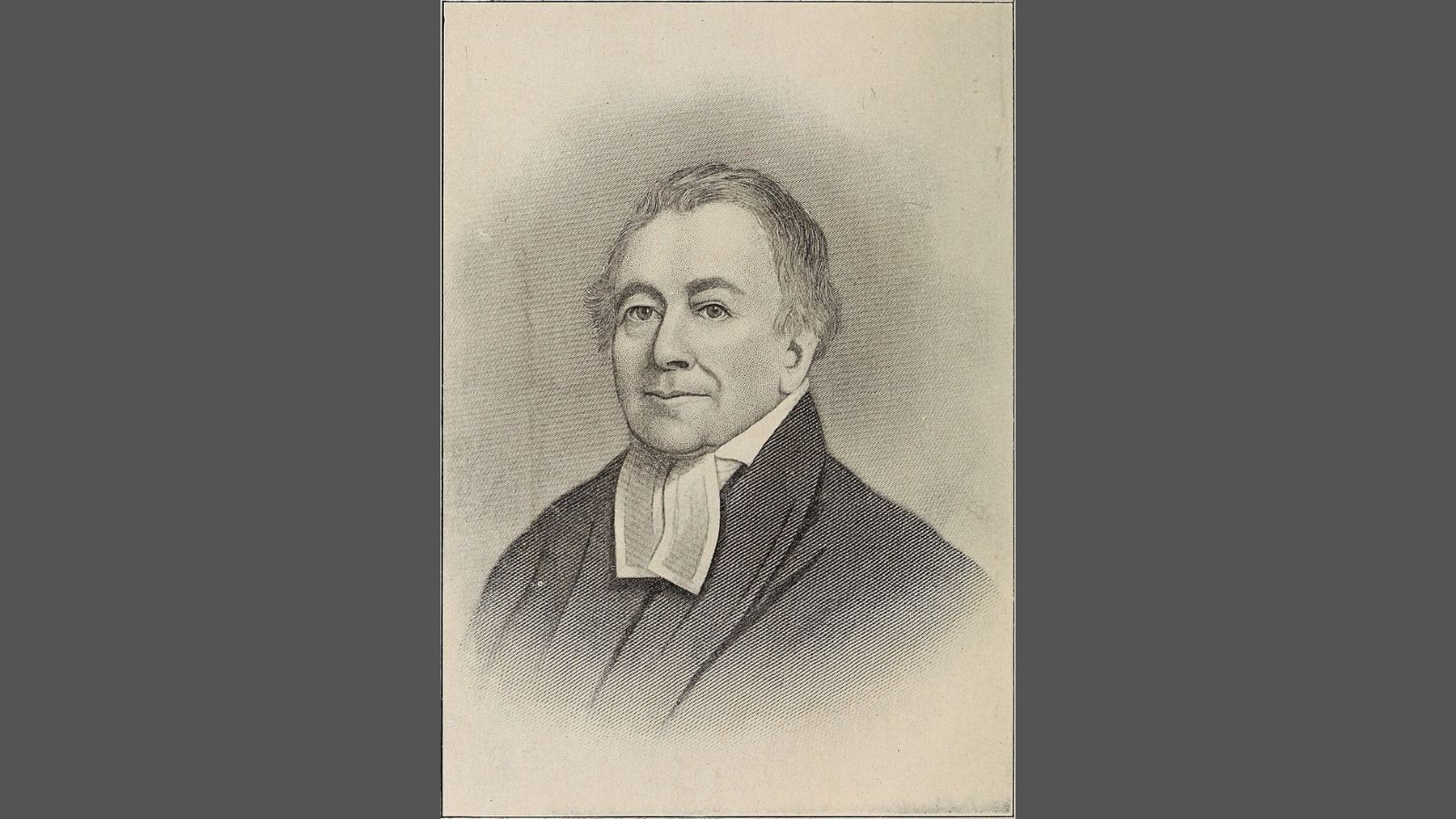
But an individual with arguably equal personal accomplishments and multifaceted talents, Manasseh Cutler, has been mostly ignored. The Post Office put him on a three-cent stamp nearly 90 years ago, but until the late great historian David McCullough championed Cutler’s virtues (Pioneers, his new posthumous History Matters) towards the end of his distinguished career and even after, he was largely ignored. Cutler should be revered for two gigantic accomplishments. First, through adroit maneuvering and politicking, he kept slavery out of the large expansion of the nation that accompanied the Northwest Ordinance of 1787. Three-quarters of a century before Lincoln’s Emancipation Proclamation, Cutler was responsible for prohibiting slavery in what then was the nation’s fastest-growing section, known now as the Midwest. Lincoln grew up from the age of seven in slave-free territory (Indiana, later Illinois) courtesy of Cutler. As a scholar who reveres Lincoln and even once spoke admirably of him at the Lincoln Cottage a few miles from the White House, where he drafted the Emancipation, I think a decent case can be made that Cutler arguably did almost as much for black advancement in American democratic life, long before Lincoln was even born.
Second, Cutler promoted public support of education in a largely unprecedented way. He provided the majestic language of Article Three of the Ordinance: “Religion, morality and knowledge being necessary to good government and the happiness of mankind, schools and the means of education shall forever be encouraged.” The law, which largely resulted from earlier discussions at the Bunch of Grapes tavern in Boston by a group that soon became called the Ohio Company, provided public lands for educational purposes, and out of it was created the first college in the Midwest, Ohio University. (Full disclosure: I am part of an ongoing but likely successful fundraising drive to erect a statue to Cutler on that university’s campus next to its handsome 200+ year-old administration building named after him, generously supported by, among others, a prominent member of the Ohio black community.)
Cutler adroitly made deals with key politicians to get their support for the legislation in the Confederate Congress, for example, helping some of them get opportunities to secure lucrative claims to some of the new public land. Cutler himself went on later to serve in the Congress created by the new U.S. Constitution.
Yet, if you had asked Cutler, “What do you do for a living?” he likely would have said, “I am a Congregational minister in Massachusetts,” a job he held for over 50 years, beginning a few years after graduating from Yale. But like the other polymaths mentioned above, that does not begin to describe Cutler’s accomplishments. He was probably the leading botanist of his era, collecting vast numbers of plant species. He was an amateur geologist and explorer. He climbed the highest peak in the Eastern United States (in New Hampshire), naming it “Mount Washington,” and attempted to scientifically measure its height (admittedly, somewhat inaccurately). He became a good friend of other colonial era polymaths, including Franklin, and was an elected member of both the American Philosophical Society and the American Academy of Arts and Sciences.
1776 was truly an annus mirabilis, bringing not only the creation of our great nation but also such important earth-changing events as Adam Smith’s epic book The Wealth of Nations (championing free trade and the power of markets) and James Watt’s first commercial use of the revolutionary steam engine, an important part of the emerging Industrial Revolution that raised living standards and life expectancy. It was the finest manifestation of one of the greatest movements in world history, the Enlightenment. In this semiquincentennial year, let us rejoice in the contributions made by these extraordinary Revolutionary Era Americans, including the neglected Manasseh Cutler.
READ MORE from Richard K. Vedder:
America’s Universities: A Multi-Generational Perspective
Aristotle on a Balanced Budget Amendment
Promoting Campus Viewpoint Diversity: A Modest Proposal
Richard Vedder is a distinguished professor of economics emeritus at Ohio University and senior fellow at both Unleash Prosperity and the Independent Institute.



















