
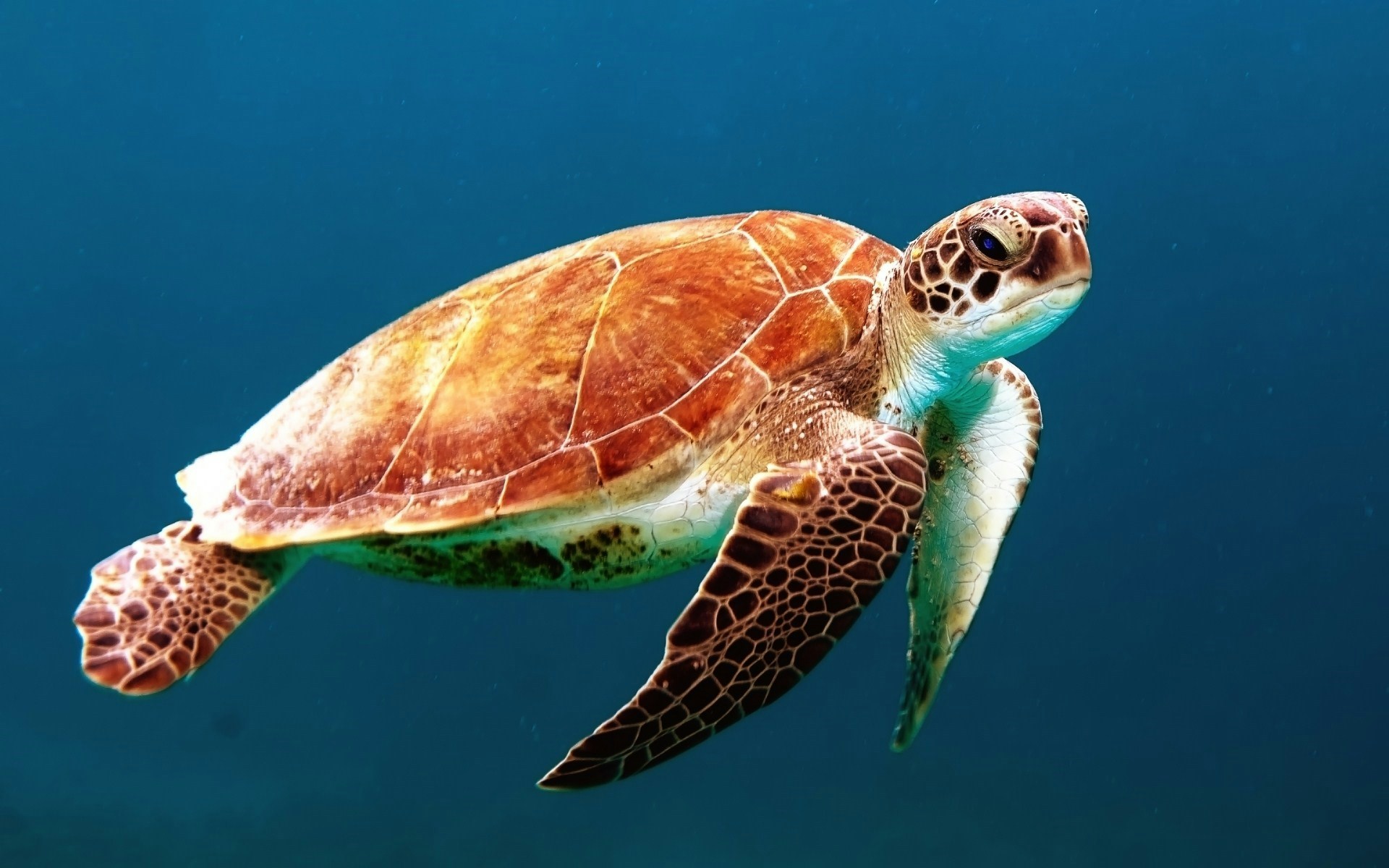


China’s Ministry of State Security would like its citizens to be on the lookout for foreign spies, including, apparently, turtles.
The ministry claimed in a Friday WeChat post that foreign intelligence agencies were harvesting maritime data “through a variety of new spying devices” from the waters around China. Sensors attached to marine animals such as sea turtles and large fish were allegedly discovered “collecting sensitive marine environment data such as water temperature, salinity and ocean currents in real time, and transmitting them overseas via satellite.”
The government went on to offer fishermen financial rewards of up to 500,000 yuan, or about $74,000, for uncovering spying devices prowling in China’s waters.
Other alleged espionage devices included detection buoys that can collect sound wave data and map the signatures of Chinese submarines in real time, and a type of wave glider “powered by solar energy for its detection, communication, and positioning systems” that can transmit military maritime activity via satellite. Underwater “lighthouses” that could provide transit data to foreign submarines in Chinese waters were also mentioned.
The use of animals for military purposes, however, is not particularly new. In 2019, a Beluga whale turned up off the Norwegian coast wearing a harness with a mount for a camera. Although Moscow never officially reacted to it, the speculation was that it belonged to the Russian navy. The Soviet Union had run a program training animals like seals and dolphins for underwater detection purposes. British intelligence reported in 2023 that Russia had trained and deployed bottlenose dolphins to “counter enemy divers” in the harbors of its Sevastopol Black Sea fleet base in Crimea.
The U.S. Navy has also run several programs since the 1960s that train and utilize marine animals like dolphins and sea lions for reconnaissance and recovery missions. Both dolphins and sea lions are known for “their trainability and adaptability to a wide range of marine environments.”
The ocean is perhaps one of the least visible and discussed fronts of military intelligence gathering. It is also one of the most important. Data concerning currents, water temperature, and sound conditions are not trivial scientific details. They shape submarine detection, concealment, and long-term tracking.
That makes China’s concern over foreign access to maritime data very real, even if the warning about spy turtles sounds ridiculous. It is no foreign policy secret that China claims sovereignty over nearly the entire South China Sea and has spent years contesting the territorial claims of the Philippines, Vietnam, and other Southeast Asian states in the region through naval pressure. Beijing has actively operated just below the threshold of open warfare through maritime blockades, extensive harassment of vessels in “gray zones” between territorial claims, and the construction of artificial islands as military bases.
For the powers operating in the South China Sea, access to maritime data is access to military data. China would prefer to have sole access to information that can expose its naval operations ahead of time, especially in disputed waters.
Does the Ministry of State Security’s grim warning about spy turtles threatening national security sound absurd? Yes, it does, but the strategic implications at stake are far from imaginary.




















