
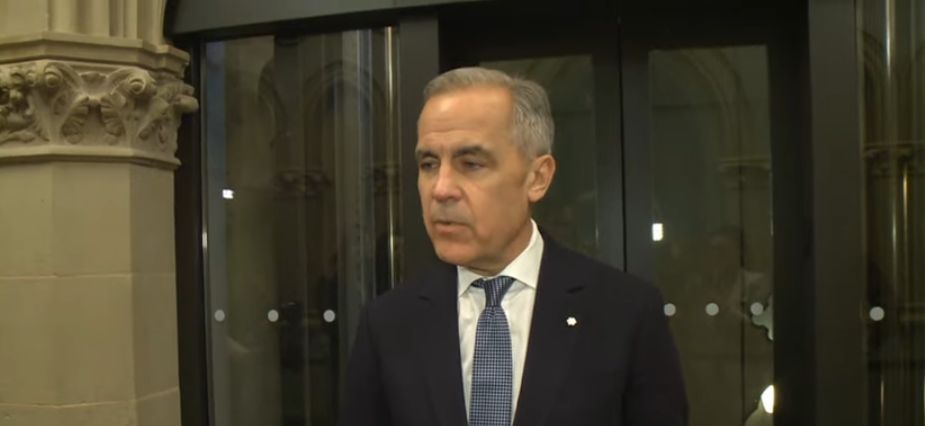


On April 2, 2025, shortly before the last federal election, Preston Manning published an op-ed in the Globe and Mail warning that if Liberal Leader Mark Carney was elected, he could go down in history as “the last prime minister of a united Canada.” Manning is not a political hack, nor is he a sensationalist. Based in Alberta, he is an elder statesman in Canadian politics.
After the Conservative Party was nearly wiped out in the 1993 election, going from a comfortable majority of 156 seats down to just 2 seats in the House of Commons, he founded the Reform Party, which began to win seats in the west. It evolved into the Canadian Alliance and, in a unite-the-right movement, merged with the Progressive Conservative Party to become the Conservative Party of Canada, which was finally elected on Jan. 23, 2006, under the leadership of Stephen Harper. As one might have expected, there was considerable backlash in the mainstream media to Manning’s op-ed when it was first published, but as things have evolved since Carney was elected, it is looking more and more as if he may have been prophetic. (RELATED: The Inimitable Mr. Carney)
The way things are going, Alberta may not be the only province that wants to leave the confederation.
Well before Carney’s Liberals were elected, there had been a secessionist movement in Canada’s west, particularly in the province of Alberta. Due to its petroleum industry, Alberta is Canada’s economic powerhouse. But also, due to that industry, the province has been repeatedly abused by successive Liberal governments, especially after the country officially adopted a net-zero policy under Justin Trudeau on June 29, 2021, with the “Canadian Net-Zero Emissions Accountability Act.” Carney is a globalist and an unrepentant self-styled climate ideologue, so, predictably, since he was elected prime minister, the secessionist movement in Alberta has come on in full force. (RELATED: Secession in Alberta and the ‘Other-ing’ of Conservatives in Canada)
Officially, the government of Alberta under Premier Danielle Smith is not in favor of secession. But it is in favor of democracy, and a grassroots movement called the Alberta Prosperity Project (APP) has collected over 300,000 signatures to put the question before the citizens in a referendum, far more than the legally required number.
However, the petition was challenged in court by some aboriginal groups in Alberta on the grounds that it violates their treaty rights with the British Crown, and on May 13, 2026, Trudeau-appointed Judge Shaina Leonard, who overturned the decision of Elections Alberta, the government agency that handles such matters, to approve the petition. Nevertheless, at the end of the day, Judge Leonard’s ruling may prove to be irrelevant. The Alberta government legally has the right to hold a referendum even without reference to a petition, and Premier Smith has indicated that she will probably do so.
The Liberal-appointed judge is not the only arrow in Carney’s quiver. In the wake of the Quebec separatist movement — which produced two unsuccessful independence referenda, in 1980 and 1995 — the Liberal government of Prime Minister Jean Chrétien enacted the Clarity Act in March 2000. The law stipulated that any future referendum on secession would be recognized only if the question presented to voters was clear and unambiguous, and if a clear majority supported separation. Fair enough.
It is a commonplace that almost any referendum can be made to pass if it is so vague that the electorate does not know what they are voting for. But Carney has now announced that he is planning on playing games with that particular piece of legislation by declaring that even if a separation referendum is passed in Alberta, it will be up to the federal parliament to determine if the referendum was valid based on its arbitrary interpretation of the question of voter participation. In other words, he means to replace clarity with ambiguity. Moreover, since he now has a majority in parliament after having persuaded a couple of treacherous and opportunistic Conservative members to cross the floor, he can theoretically do whatever he wants to do. Rules for thee but not for me.
When he made this declaration, it raised the ire not only of separatists in Alberta but also of members of parliament from Quebec who remembered well the tussles that that province had with the feds when it was trying to separate. Back in the day, they maintained, and still maintain to this day, that the definition of a majority is 50 percent+1. So, Carney took some heat in parliament from the Quebec delegation, too.
But what does he care? He will do whatever he can do, whatever he thinks he has to do to have his way. Recently, he even threatened to declare martial law by invoking the Emergency Measures Act, as Justin Trudeau did to crush the peaceful truckers’ protest during the COVID lockdowns. He might have been trolling when he made this declaration, or he might have been serious. When Trudeau declared martial law, he was challenged in court and eventually lost. It was a disgraceful thing to do, but why would he care? “It worked, didn’t it?”
One might be forgiven for asking why the Liberals want to keep Alberta in confederation anyway. After all, Alberta is a conservative province, the equivalent in Canada to a red state in the U.S. There are two reasons for this.
First of all, money. Alberta is at present Canada’s economic engine, and Canada has this thing called equalization payments wherein revenue from the wealthier provinces is transferred to the poorer ones. At this point in history, Alberta is the wealthiest province. The Liberals do not want Alberta to leave the confederation, not only because of the money it generates for the other provinces but because even the Liberal base would consider the breakup of Canada to be a big failure on Carney’s part, and might even boot him out of office for it. The left, after all, are narcissists and despite their contempt for anyone who does not follow their ideology, narcissists hate to be shunned, to be abandoned to stew in their own juices.
Meanwhile, Canada has just entered an economic recession. Because of his stints as Head of both the Bank of Canada and the Bank of England, Carney was sold to the public as some sort of economic genius, and now it is looking more and more to ordinary Canadians, even Liberals, that they may have been sold a bill of goods.
It is also worth noting that when he was Head of the Bank of England, Carney used his prominent position to fight against Brexit. But ultimately, it was not he, but the British Conservatives, that sabotaged the Brexit referendum after it had passed. And the same thing may also be happening in Canada. Premier Smith has set October 19 as the date for the Alberta referendum. But after doing so, she dampened the fire for separation by predicting that leaving Canada would cost Alberta $400 billion. It is impossible to make an accurate prediction about such a complex matter, and she is leaving out the benefit, both financial and ideological, of making the move. She appears to be playing both ends against the middle. One thing is certain: even in a free and fair process, voting no longer means what it used to.
READ MORE from Max Dublin:




















