
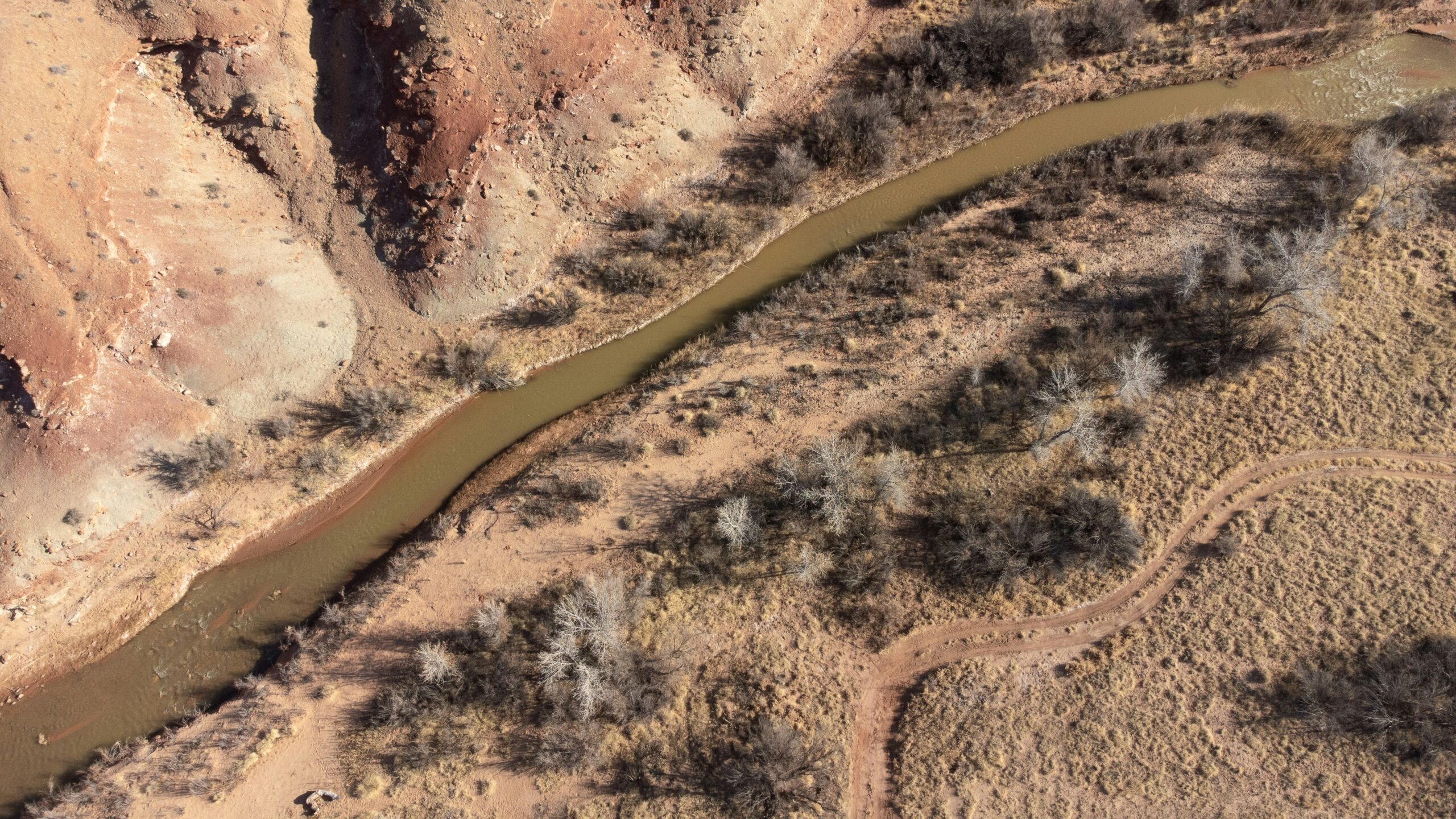


As the nation pushes ahead in 2026 after last fall’s longest government shutdown in American history, it’s time to address one area that went mostly unnoticed during the shutdown: federal lands. How did these lands affect Americans during the shutdown? Well, quite a bit.
While most headlines focused the public’s attention on halting SNAP benefits and flight delays and cancellations as air traffic controllers went unpaid, the closing of federal lands to the public and the ripple effect it had on Americans during the shutdown was deeply detrimental. (RELATED: The SNAP Reset, Too Long in Coming, Is a Happy Accident of the Schumer Shutdown)
For starters, the federal agencies that manage and regulate these lands, including the Bureau of Land Management (BLM), the U.S. Forest Service (USFS), the Fish and Wildlife Service (FWS), and the National Park Service (NPS), were forced to close many aspects of their operations, from maintenance and resource management to law enforcement and research. This had an effect especially on national parks like Yosemite and Yellowstone, as well as on permits for natural resource extraction (oil, coal, gas, etc.). Though national parks remained partially open, the limited staffing of these areas forced them to close certain campgrounds and service centers, caused trouble with trash and sanitation services, and handicapped emergency services.
Federal lands where permits exist to extract natural resources were spared no mercy. Under the 2025 BLM contingency plan, the processing of “oil & gas permits/leases, coal energy leases, and other energy and mineral resources necessary for energy production” could continue to operate, but some new leases or permits would have to wait unless otherwise determined. “Leases and special recreation permits can continue operations as long as they do not need BLM field monitoring or regulatory oversight in the short term,” the document states. “No new special recreation permits will be issued. Certain events operating under approved special recreation permits with a cost-recovery provision may continue.”
While current gas and oil operations were allowed to remain active, any new permits and leases to harness other resources or initiatives for commercial activities were delayed or completely halted. Alaska Fisheries, for example, were faced with the real concern that their ability to fish in submerged federal lands would be hindered due to the lack of oversight and adequate information needed to harvest. Gateway communities whose economies rely on federal lands — commercial activities, tourism, and other industries — faced the real threat of losing their livelihoods as permits for new businesses were delayed and halted. Gateway communities were at risk of losing close to $80 million each day due to lost revenue from tourists’ spending.
To some observers, these negative effects may appear as only minor disruptions, with minimal effect on anyone outside these localized regions. But in fact, the halt and delays for commercial as well as permits for other industries on federal lands meant the disruption of the fragile supply chain of the overall U.S. economy, as well as the slowing of production of certain goods, loss of potential revenue, and risk of higher prices on commodities. The limited capacity of federal park operations and the closing of certain areas put immense stress on the national tourism industry; outdoor recreation comprises 2.3 percent ($639.5 billion) of American GDP.
The ripple effect caused by the closing of federal lands was widely damaging. Yet while these problems will not be solved overnight, the long-term solution may lie within an earlier proposed solution that suddenly has much more credence.
The solution lies within Utah Senator Mike Lee’s proposal of selling federal lands back to the states, which was originally part of the Big Beautiful Bill. Under Lee’s proposal, the idea was to direct the Secretary of the Interior to sell around 0.25 to 0.75 percent of the land managed by the BLM and USFS (which would be moved from USDA to the Department of the Interior) that was within five miles of population centers for the purpose of housing development.
A report conducted by the American Enterprise Institute’s Housing Center found that Lee’s proposal would have provided a considerable amount of land to address both new homes and new funds to the treasury. “Our analysis finds that developing just 135-180 square miles of the most suitable BLM land, a minuscule fraction of the total, could yield approximately 1 million new homes over ten years,” the report states. “This would substantially address the West’s housing shortage while generating an estimated $15 billion for the U.S. Treasury from land sales.” Unfortunately, Senator Lee was forced to withdraw his proposal due to the strict constraints of Senate rules for budget reconciliation.
One might ask, “What does Lee’s plan on selling federal lands for housing development have to do with addressing the problems raised about the handling of Federal lands?” The answer lies within the very principle that unites them: stewardship.
For years, the federal government and environmentalists have insisted on the need to keep America’s natural beauty and resources safe from the exploitation of “greedy businessmen.” Yet, what they will not admit is that the very agencies in charge of being America’s stewards of these lands and resources have been abysmal.
The federal government has a long record of mismanagement and implementing policies that have destroyed natural ecosystems on federal lands, as well as potential jobs in these areas. For example, a report by the Competitive Enterprise Institute notes: “reducing timber production by more than 80 percent since 1990 has destroyed hundreds of thousands of jobs and caused scores of mill towns to disappear. Sustained-yield management of National Forests has been replaced by ‘management’ through catastrophic forest fires.” Worse, the federal government has literally lost track of federal lands. A 2023 New York Times piece revealed that the federal government lost track of close to 15 million acres of state and federal land. Not to mention that the backlog for deferred maintenance and repair (DM&R) of these lands is currently $33.15 billion, with a projected additional $6 billion over the next five years.
It is worth recognizing just how much these lands dominate a significant amount of the American landscape. According to the U.S. Government Accountability Office, the federal government owns roughly 30 percent of the land in the United States — roughly 650 million acres of land. The majority of these federal lands dominate states out west, such as Senator Lee’s home state of Utah (63.1 percent of which is federal land), Nevada (80 percent), Alaska (60.9 percent), and Idaho (61.9 percent). When considering these numbers and the ongoing problems with these lands, one can see that this is not a partisan issue. It is an issue of who should be the stewards of American lands. And here’s the answer.
Who else would be better stewards of these lands than the very people who live there every single day, rather than unelected bureaucrats hundreds, if not thousands, of miles away? Lee’s efforts to sell federal lands could even be coupled with efforts to return their maintenance to the states and individuals who rely on them for their livelihoods. States like Alaska, where there’s no cooperation between state and federal agencies, will have a better chance of analyzing and efficiently solving the key problems that would have otherwise been delayed due to red tape and decisions made by someone outside their state.
Though Senator Lee’s proposal seeks to address the housing affordability crisis, he has made it clear that he also seeks to allow local governments to use the land to help address their own needs. During an interview with the Utah Public Land Alliance, Lee stated that these lands “may potentially assist these communities with housing needs and infrastructure and resulting increased tax revenue.” This means these communities could use these lands to better themselves by developing new infrastructure (including water infrastructure), businesses, and other activities.
Mike Lee’s proposal to sell federal land back to the states isn’t just a means to help alleviate the financial pressure on the American taxpayer; it’s an effort to restore the stewardship of America’s lands and put states’ and their people’s destiny back into their own hands. No state should ever be held hostage by the federal government, especially with its own land. It is time to reconsider Lee’s proposal and begin the road towards restoring sound stewardship in America.
READ MORE from Hunter Oswald:




















