
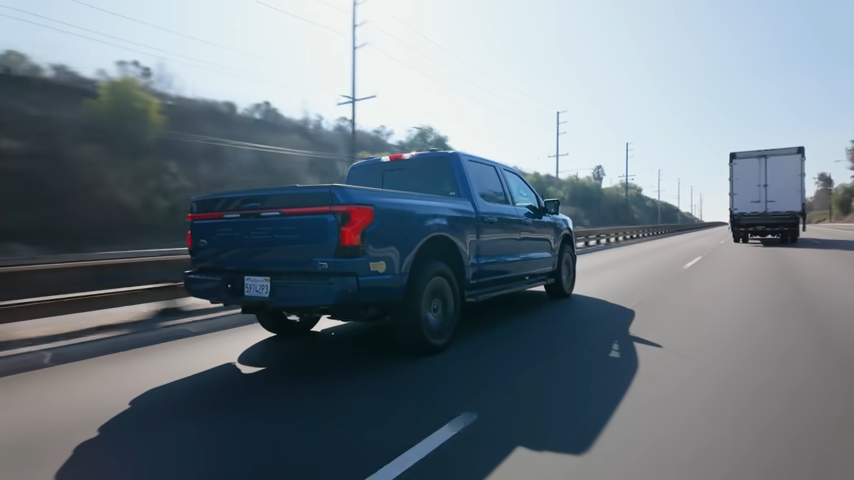


Annoying things — stupid things — are often acronym-ized. A fine example of this is automatic stop-start (ASS) technology. Another — the latest example — is EREV. Can you guess what this acronym refers to?
Extended Range Electric Vehicle.
It is perhaps the most stupid thing to come down the pike since ASS, because ASS is merely annoying, like a mosquito that buzzes around your face while you’re trying to enjoy the day outside.
But what is an Extended Range Electric Vehicle? It is a stupid — clumsy — effort to fix not so much the range issue that besets most EVs but rather the extended recharge time most people aren’t willing to deal with. It is time-wastage more than anything else that has caused the EV tide — seemingly inexorable just three years ago — to recede. There are and have always been regular vehicles that have modest driving ranges. For example, the Mazda Miata’s “city” driving range is only 309 miles. Many EVs boast more driving range. But the Miata’s gas tank can be fully refueled in about the time it took to read this paragraph — because that’s about how long it takes to pump 12 gallons of gas into the Miata’s tank.
Mazda has not had difficulty persuading people to buy Miatas. A V8-powered Dodge Charger Hellcat’s range is even less, yet people drool over these cars.
An EV that has say a 400 mile range can be driven farther (perhaps, assuming it is not too cold or too hot out) before it needs to be recharged, but when it does need to be recharged, the wait will be exponentially longer; at least half an hour if not a full hour (or more) to get a full charge. The italics are deployed to point out one of the many oily dissemblings about EVs that have soured people on these devices; i.e., that while it is true it is possible to recover a partial charge in say ten minutes at some “fast” chargers, it is not possible to get a full charge in that amount of time (or anything close to that amount of time) because these “fast” chargers revert to slow charging once the battery reaches about 80 percent capacity, as a precautionary measure. To reduce the risk of a conflagration — a fire — and to reduce the stress imparted to the battery by “fast” charging it with high voltage electricity.
And even the 10-minute partial charge is a colossal waste of time when you could be fully fueled in less than half that time. Most people haven’t got the time to waste — and this is doing to EV sales what a bulb of garlic does to Dracula.
Enter the EREV.
It is still an EV, but it “solves” the recharge time-waste problem by carrying around its own portable generator; that is to say, a gas-burning engine. This engine doesn’t even partially propel the vehicle (as in a hybrid vehicle, which uses a battery pack and electric motors to provide supplementary propulsion). It simply runs to generate electricity to feed the battery pack that sends electricity to the motors that propel the vehicle. It amounts to something like bolting a helicopter to the back of a Cessna so as to keep the plane in the air.
Some might ask: Why not just skip the helicopter and fly the Cessna — by itself?
This is not the right question to ask. The EREV answers the question of compliance.
And, yes, the pressure to comply with federal fuel economy (CAFE) and carbon dioxide “emissions” regulations still very much exists. Trump hasn’t rescinded or eliminated these regulations; all he has done is dial them back some. Instead of having to achieve compliance with a “fleet average” of 50 MPG, car companies will only have to achieve compliance with a 35 MPG “fleet average.” The same standard that was in force toward the end of Trump’s first term, back in 2020. The 35 MPG standard is why the 2.0-liter turbocharged four has become the nearly Universal Engine in every vehicle, and it is why six-cylinder engines are no longer even available in cars that used to commonly offer them, such as the Toyota Camry and the Honda Accord.
It is why turbocharged/hybrid-augmented six-cylinder engines have largely replaced the V8s that used to be common in big SUVs and full-sized trucks, and full-size luxury sedans.
And it is why there was so much malinvestment in EVs. These haven’t been selling, but that hardly matters. It is the manufacturing of them that helps achieve compliance. Each EV that is made counts toward a car company’s overall “fleet average” CAFE compliance score and helps make its “carbon footprint” smaller. Whether they sell is another problem. But it is not a compliance problem.
The EREV is the solution to that problem — or so the car companies hope. They figure that maybe people who would not buy an electric Lightning or Ram pick-up might buy one if they didn’t have to wait constantly for a recharge. Ergo, they have decided to install an engine in these EVs to generate the electricity they need to power their electric drivetrains. Et voila!
The EREV.
Like ASS, it is a solution to a problem created by the government that we all get to pay for — even if we don’t buy an EREV or an ASS-equipped vehicle — because these things impose general costs on all of us, including the cost of no longer wanting any part of anything new they’re making and trying to make us accept.
And pay for.
READ MORE from Eric Peters:




















