
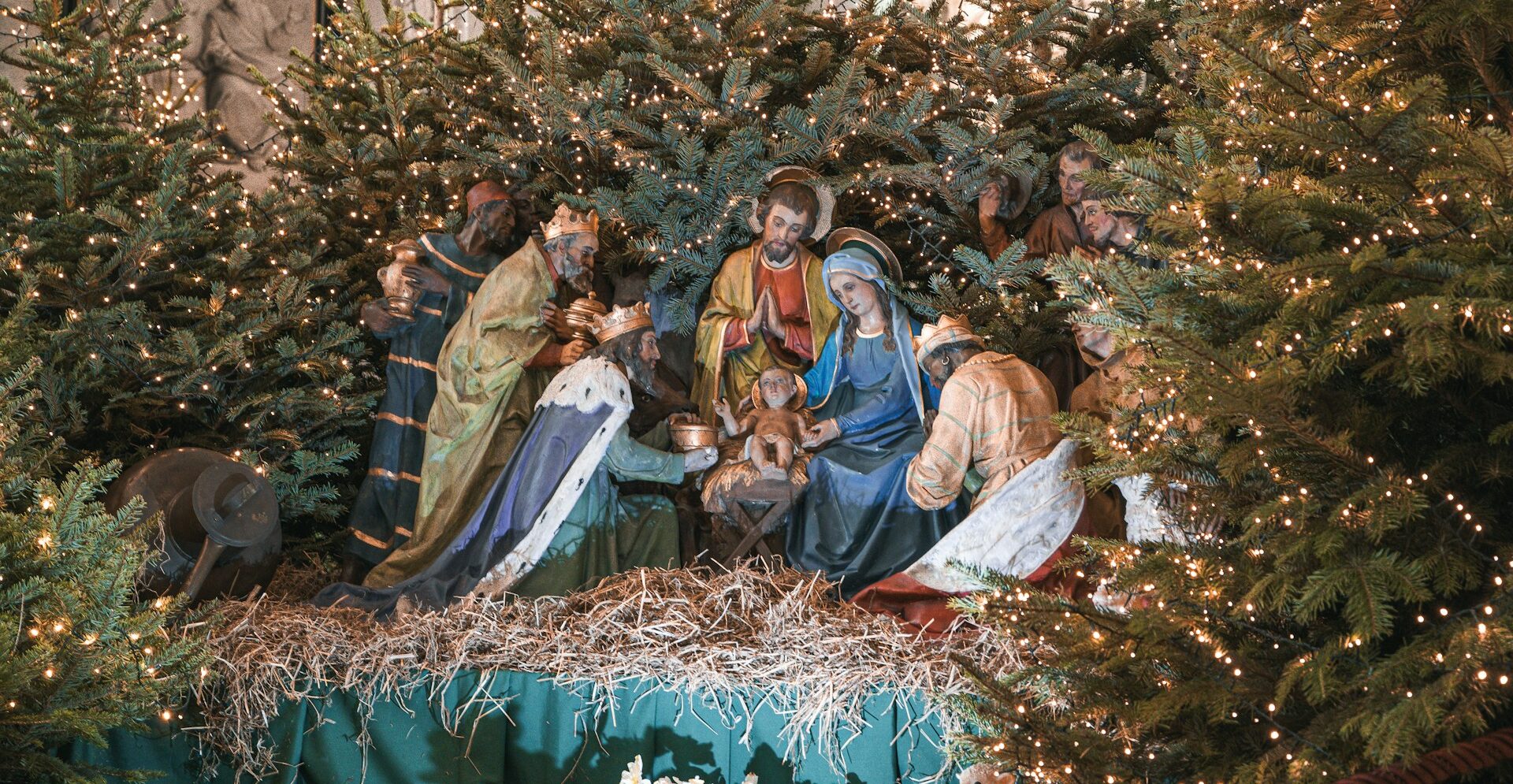


This Christmas season, do yourself a favor by clicking on Providence magazine, a journal devoted to Christian realism, to read the powerful reflections and insights about Christmas of Walter Russell Mead, who teaches strategy and statecraft at the University of Florida, writes a regular column for the Wall Street Journal, and is the author of seminal books on American foreign policy, including God and Gold, Power, Terror, Peace and War, Mortal Splendor, and Special Providence. Mead has thus far written four posts in his Yuletide blog in Providence, and there will be 10 more during this Christmas season. “For Christians,” Mead writes, “Christmas is the hinge of the world’s fate, the turning point of life, … the most important thing that ever happened … and we celebrate it every year because it is still happening now.”
Mead’s blog is a personal, spiritual, and historical reflection on Christmas. He informs us that he is Anglican, but his blog is meant for all Christians, which he notes includes about two-thirds of the American people. Even longtime Catholics like me can learn interesting facts from Mead. For example, St. Francis of Assisi assembled the first manger scene in 1223, “hoping that it would draw attention away from gift-giving and secular celebrations to the religious meaning of the season.” And Christmas had a rocky history in the United States. Some of our Founders associated the Christmas holiday with “papistry and superstition.” Many early New England Christians refused to celebrate it. Mead credits zealous Protestants and German immigrants with popularizing the holiday in America. St. Nicholas, who was born in modern-day Turkey and whom Santa Claus was named after, was persecuted by the Romans and today is banned by Islamic authorities in the land of his birth. Mead laments the fact that it is the “commercial, consumerist side of Christmas that has won the most acceptance worldwide,” while faithful Christians are still persecuted in many parts of the world.
In his second Christmas post, Mead supports the credibility and reliability of the three Gospels that relate the story of Christ’s birth (Mark does not mention the Christmas story), though the stories are not identical. “The life of Jesus,” Mead writes, “is better attested by more contemporary writers at greater length than the life of just about anybody else from [Jesus’] time period; we have more evidence about what He said and did than we have about any of the other famous people of His era.” Mead, like other faithful Christians, believes that the Bible, including the books of the New Testament, are divinely inspired accounts of “the encounter of humanity with God” and His Son.
In Mead’s third Christmas post, he discusses the Virgin Birth of Christ, describing it as “one of the most controversial and confusing theological concepts around,” but that is nevertheless “central to the Christmas story” because it “proclaims the union of human flesh and the divine.” Jesus is both God and man. He was and is much more than a moral teacher. He is the Savior of the world who died upon the cross for our sins. And Mary is the “strong and faithful woman” who courageously says “yes” to God and thereby “opened the door to salvation for the whole human race.”
In the fourth Christmas post, Mead reflects on Holy Innocents’ Day, which commemorates the deaths of the babies in Bethlehem that King Herod ordered killed to prevent the emergence of the new King of the Jews. Matthew’s Gospel tells the story of this “mass murder” committed for political reasons. The Wise Men who brought gifts to the baby Jesus were warned in a dream about Herod’s murderous intentions, so they neglected to return to Herod to tell him where they found Jesus. Joseph took Mary and Jesus to Egypt to escape Herod’s clutches after also being warned in a dream. “[T]he streets of Bethlehem,” Mead writes, “[were] filled with the cries of mothers as their children were taken and killed.” Jesus is saved to carry out His mission on earth, which ends with His death on the cross and resurrection. The Christmas story, Mead notes, is not all joy and happiness.
There are 10 more Christmas posts to come. They are truly a blessing — a gift to Christians and people of all faiths from the brilliant and devoted teacher, Walter Russell Mead.




















