


Doing the right thing in the wrong way can be a costly initiative, indeed — especially when Congress gets involved.
The Hart-Celler Act (U.S. Immigration Act of 1965) was well-intentioned in correcting a prior wrong, but Congress undermined its own efforts to control immigration by undoing the good that previous legislation had achieved.
President Donald Trump is attempting to rectify much of what the previous Biden Administration did to perpetuate poorly controlled legal (as well as blatantly illegal) immigration onto America’s shores and across its Southern border. (RELATED: Is Selective Immigration the Key to Reducing Antisemitism?)
U.S. Rep. Chip Roy (R-TX) has proposed legislation to go beyond Trump’s initiatives — seeking to effectively “pause” immigration into the U.S. During an appearance on Fox News, the Texas congressman reiterated his call to “temporarily halt” America’s current immigration policy.
Essentially, the Act proposes to freeze nearly all legal immigration admissions until specific conditions are codified into law.
The PAUSE Act (Pausing All Admissions Until Security Ensured Act) seeks to impose a moratorium on all visa issuances (except tourist visas) and immigration status adjustments, codifies and expands President Trump’s H-1B fee, ends Optional Practical Training (OPT), and terminates the Visa Lottery Program. Essentially, the Act proposes to freeze nearly all legal immigration admissions until specific conditions are codified into law. (RELATED: America Is a Real Country, Not the World’s All-Star Team)
The Texas Republican has likened his proposed legislation to that enacted in the 1920s.
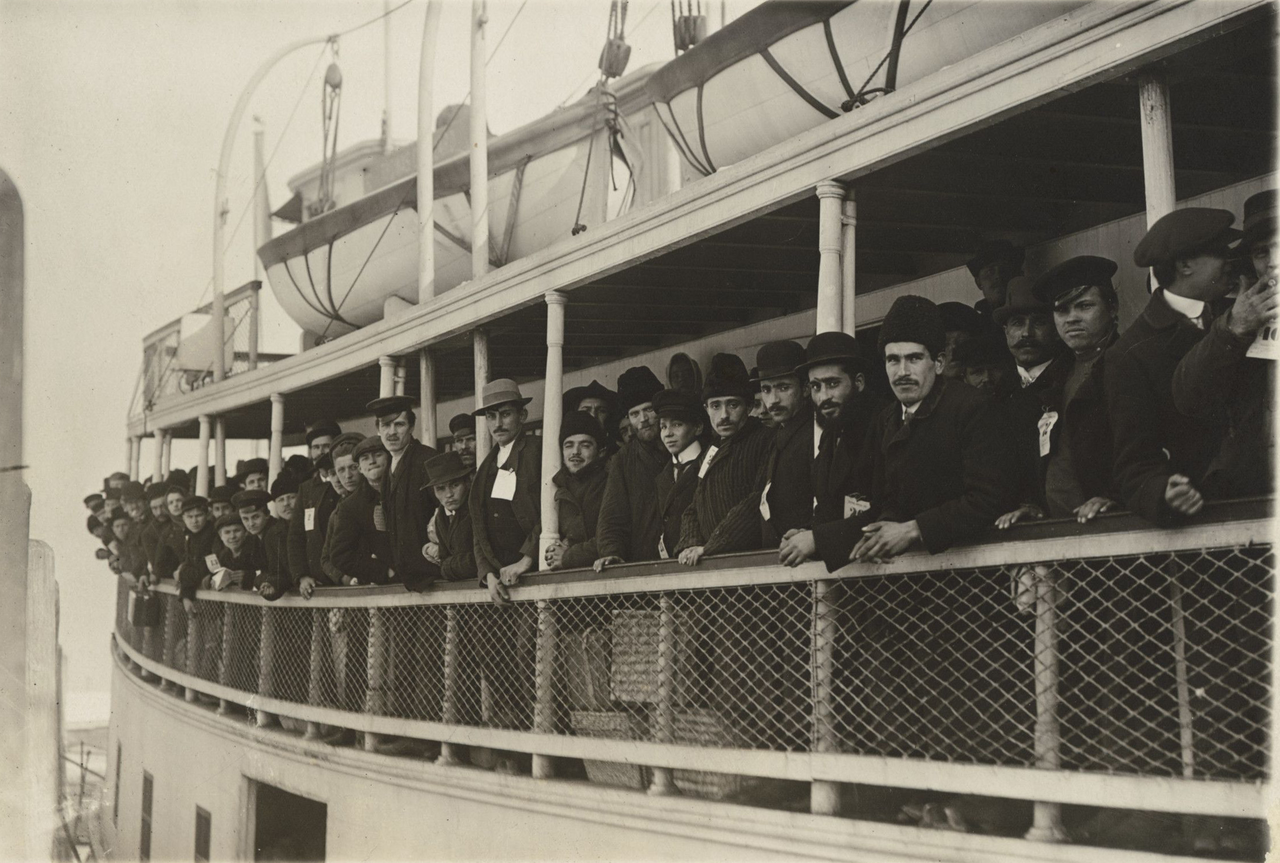
Roy is alluding to the Immigration Act of 1924, an epochal piece of legislation that ushered in a four-decade-long “Great Pause” in mass immigration that allowed the U.S. to assimilate the 20-plus million immigrants who arrived during the “Great Wave” that had begun in the 1880s.
To its credit, the “pause” did foster a national economic climate conducive to economic relief — especially for long-suffering Black citizens. Economists Kerwin Kofi Charles of the University of Chicago and Patrick Bayer at Duke University determined that from 1940 to 1970, paralleling much of the Great Pause, the average real earnings of white men rose by 210 percent and black men rose by 406 percent.
Yet, while the 1924 Act dramatically reduced immigration, it did it by establishing country-by-country immigration quotas in reaction to the vast increase in immigration from Southern and Eastern Europe since the 1880s. The Act favored immigrants from Northern and Western Europe while severely restricting those from Southern and Eastern Europe, as well as completely excluding immigrants from Asia.
Sen. David Reed (R-PA), an author of the 1924 legislation, argued that “it was best for America that our incoming immigrants should hereafter be of the same races as those of us who are already here.” The result was that the debate surrounding the 1924 Act focused to a large extent on often contemptible racial rationales for the restrictions imposed.
The legislation created a curious mix: not only “progressives” and “liberals” but “conservatives” and avowed “racists” supported the legislation’s restrictionist policies. Many Black leaders were on board with the act. A leading Black publication of the time, The Chicago Defender, concluded that the dramatic decrease in immigration during the First World War gave Blacks the opportunity to get a foothold in the economic world, but that there were many grave doubts about their ability to keep this foothold when fierce competition set in again.
No doubt the legislation had a four-decades-long salutary effect on the socioeconomics of American society — but it did so at great cost to how America understood itself and what we stand for as Americans.
Yet, the Act did lead as well (and in no small degree) to the civil rights revolution of the 1960s. In 1965, Congress, in its zeal to redress the misstep of national-origins quotas, restarted mass immigration legislation which would ultimately reverse the effects of the 1924 Act.
But while the 1965 legislation provided the political impetus to what became massive illegal immigration into the U.S., pausing immigration is not the answer. Such an action by Congress would characterize America in a way inconsistent with our past, detrimental to our future, and antithetical to who we are as a country — a people.
In light of the above comments, it is worth noting that at the time of the American Revolution, roughly three out of every one thousand humans on the planet resided within the territory of the former British colonies that eventually became the United States. Today, almost two and one-half centuries later, more than 40 of every 1,000 people consider themselves Americans. Demographic factors like better knowledge of nutrition and health, people living longer, and U.S. territorial expansion partially account for America’s dramatic population growth. But a critical factor has been perhaps the world’s greatest migration (from 1850 to 2025), with as many as 80 million immigrants having moved to the United States in search of a better life.
As Julian Simon so well demonstrated in his book, The Economic Consequences of Immigration, praised by Nobel Prize winner Milton Friedman, immigrants improve our economy; immigration has helped create the “American dream.” John Fitzgerald Kennedy put it in the title of his 1958 book, A Nation of Immigrants. Even today, as throughout American history, immigrants play a significant role in American economic and cultural life.
Consider that as of this writing, seven of the CEOs of the largest high-tech companies in America are immigrants, and all five conductors of the so-called Big Five leading American symphony orchestras (New York Philharmonic, Boston Symphony Orchestra, Chicago Symphony Orchestra, Philadelphia Orchestra, Cleveland Orchestra) were born in other countries. Indeed, eight of the 56 men (14.3 percent) who signed their names to the Declaration of Independence are roughly the same as America’s foreign-born population today (15.4 percent). Moreover, Federalist Papers contributor, Alexander Hamilton, was (of the initial six U.S. Treasury secretaries) the first of four foreign-born. And then there is Andrew Carnegie, Thomas Edison, Sergei Rachmaninoff, Albert Einstein, I. M. Pei, St. Frances Xavier Cabrini, Barack Obama, Elon Musk, and yes, Donald J. Trump (German-Scottish): these are a mere fraction of the immigrants, or children of immigrants, who have substantively contributed across different time periods and varying disciplines in American life.
We must not lose this legacy from whence we came — it reflects quintessentially who we are — a nation of immigrants (including the author of this work).
The Texas congressman’s idea is nothing less than a gross overreach in reforming immigration policy in his political campaign to become the next Attorney General of Texas.
READ MORE from F. Andrew Wolf:
The Netflix-Warner Bros. Merger — Is ‘Going to the Movies’ Over?
The British Need a Sixth Amendment, Badly
America’s Retirement Dilemma and Australia’s Surprising Blueprint




















