
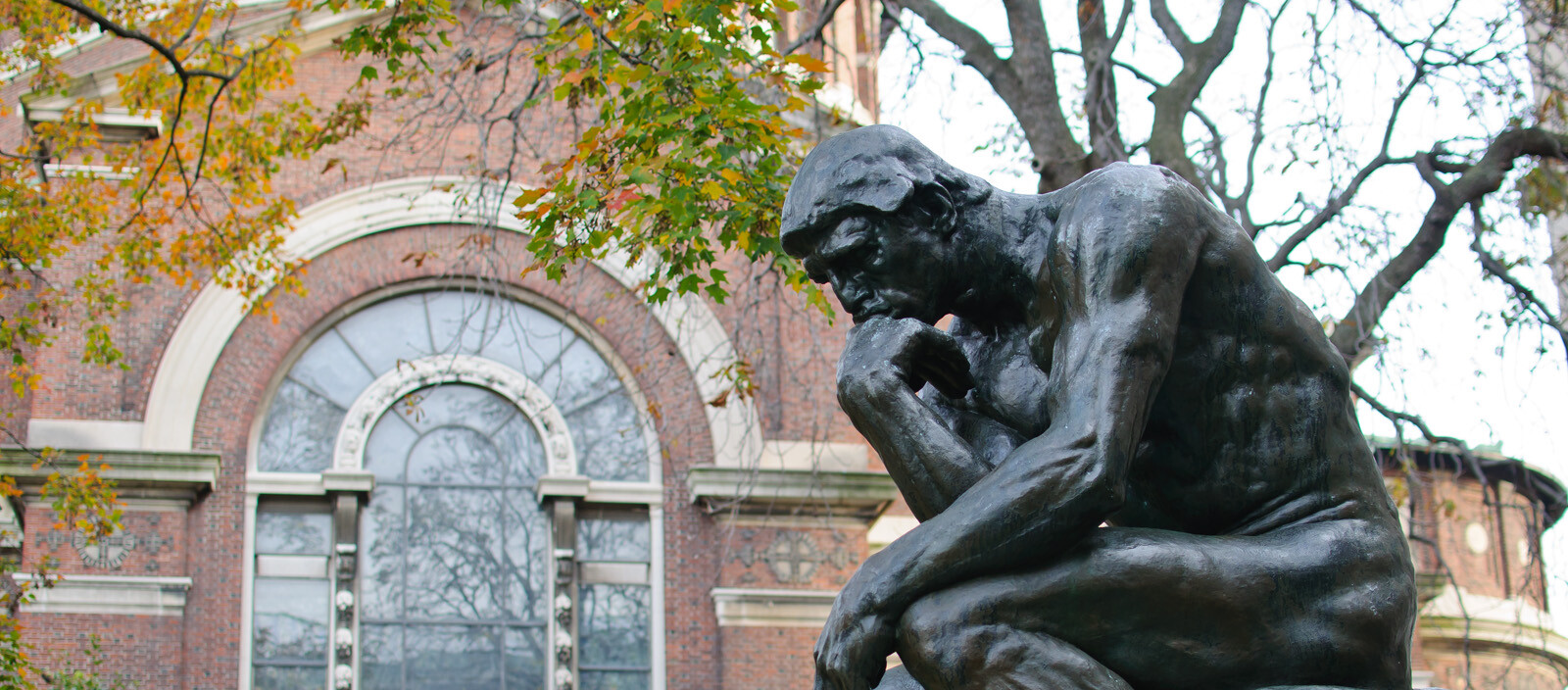


I taught my first university class shortly before John F. Kennedy was assassinated in the fall of 1963, giving me considerable historical perspectives on modern changes in American higher education. And while some changes have been beneficial (for example, we have had bigger enrollments and with that some increased access to college for those from families with low incomes), on balance, I would say higher education in America has deteriorated qualitatively if not quantitatively. Let me outline what can be called the “seven deadly sins” of higher education — adverse developments of the past six decades.
1. Declining Academic Standards
As the proportion of Americans seeking college degrees has increased, by mathematical necessity, a larger percentage of them have middling (or worse) academic preparation for college. With that, faculty expectations of their students have declined materially.
Time use data suggest that college students around 1960 averaged about 40 hours weekly on academic work, compared with less than 30 hours today — yet the mid-20th-century students earned on average grades between B- and C+ in their courses, and even lower in introductory survey classes (about a C). Today, the undergraduate grade average is a B and even higher (roughly A-) at the elite universities. While American economic success has come from doing more with less, American college students are doing less for more. (RELATED: The Children of Elites Are in Trouble)
I think grade inflation was enhanced by the introduction of student evaluations of professors, which became common after 1970. As academic labor markets started softening (largely as a result of an excess of newly minted Ph.D.s relative to new faculty positions), professors seeking increasingly scarce tenured positions tried to buy some student popularity with easy grading. Adding to the problem, at many schools, a relatively rigorous general education curriculum was watered down, with students usually taking fewer courses in the humanities (such as Western civilization or English literature) and more vocationally oriented classes. (RELATED: Grade Inflation and Campus Protests)
2. Decreased Intellectual Diversity
A hallmark of a great university is having a robust amount of diversity in thought — different perspectives on the issues of the day. Students should be exposed to and civilly debate matters of great concern and controversy. Yet the evidence is overwhelming that faculty have become overwhelmingly leftish in their orientation, and at many schools, those with traditional, conservative, or libertarian perspectives are virtually absent. (RELATED: The Amy Wax Inflection Point for ‘Elite’ Higher Education)
To be sure, there are exceptions, including some highly conservative or religious schools. My guess (based partly on my reading of some scholarly research but also on my personal experiences at several schools of varying quality) is that when I was in college in 1960, perhaps 40 percent of faculty considered themselves liberals, 40 percent middle of the road or moderate, and 20 percent conservative or libertarian — a clear but rather modest left of center tilt. My guess is that today, the proportions are more like 65 percent liberal, 30 percent moderate, and 5 percent conservative, varying considerably not only between schools but also the academic field of study.
Social science and humanities professors are more liberal than business or engineering ones. In the core social sciences and humanities, the absence of conservatives is striking: I once met an Ivy League sociologist who said he was a Republican, which so startled me that I asked for his autograph. Stories abound of faculty refusing to consider hiring those with conservative or libertarian leanings. The clash of ideas and perspectives, so important for becoming perceptively tolerant shrewd observers of the human condition, has been severely muted, making colleges often too much like the ideological monopolies that so destroyed higher education in Nazi Germany and the Soviet Union.
Fortunately, we still have a number of institutions that deviate from the typical school, attracting both students and faculty less than enthralled with the Woke Supremacy dominating the American collegiate scene.
3. Dysfunctional Federal Student Loan Program
It is the best example I know of the Law of Unintended Consequences. Federal activity started very small around 1960 but exploded after about 1980. The evidence (perhaps most notably from the Federal Reserve Bank of New York) is strong that this contributed to an explosion in college costs as universities raised their fees aggressively, correctly assuming students would borrow ever larger amounts to finance college.
In the four decades after 1980, tuition fees dramatically rose about three percent annually in inflation-adjusted terms, more than people’s incomes. Amidst general prosperity, going to college was become increasingly burdensome financially until recently, when falling student demand and market forces have led to an easing in collegiate price hikes. (RELATED: Biden’s Grotesque Plan to Pardon College Debt)
The problem has been exacerbated in recent years by various loan-forgiveness schemes, especially during the Biden years. As the Department of Education created ever more generous terms for loan repayment, and then even total loan forgiveness for many, many students simply stopped paying their loans, reasoning that in time the government would automatically discharge their debts. That, in turn, incensed millions who had either borrowed and fully repaid their loans, or were Americans without a college education that resented the favoritism showed those with degrees. (RELATED: Biden Is Still Beating Student Debt Horse)
4. Explosion in Administrative Bloat on Campuses
Administrative bloat has contributed significantly to rising college costs, but perhaps more importantly, to an erosion in emphasis on the predominant goals of a good university: the discovery and dissemination of knowledge and creative ideas. To use my own rather typical state university as an example, in 1975, there were more faculty members than administrators: today, the ratio is roughly two administrators for each faculty appointee. The student loans programs allowing massive tuition increases led to increments in revenues that were increasingly used to expand administrative staff, leading to what Johns Hopkins professor Benjamin Ginsberg has termed the “administrative university.”
The administrative staff are not typically committed to advancing learning or discovering ideas. Increasingly, they have promoted ancillary functions, like enhancing sustainability or, on some campuses, subsidizing ball throwing contests (intercollegiate athletics). The very mission of universities became increasingly blurred, obsessed with things like global warming or food insecurity that are far removed from the raison d’etre of institutions of advanced learning.
5. Pernicious Growth in So-Called “Diversity, Equity, and Inclusion” (DEI) Initiatives
DEI is much worse than other campus non-academic expansions. Not only has DEI diverted resources from the major academic functions, but it is generally racist, discriminatory, and fiercely opposed to the promotion of academic merit. America’s deserved reputation for having the world’s best universities was built on the promotion of academic excellence: high-quality teaching and cutting-edge research. (RELATED: DEI and Marxism Destroy Merit and Excellence)
Fourteen of the top 25 schools listed in the 2025 Times Higher Education Reputation rankings are in the United States. However, that leadership is being threatened, in part because the rise in DEI offices has led, in some cases, to the subordination of faculty decision-making to that of bureaucrats mainly interested in the racial composition of the staff and enforcing an ideologically driven mandate to swear allegiance to woke left causes as a condition for employment or other benefits.
A secondary impact is that the often large expenditure on DEI has led to some crowding out of funding for job number one: the creation and dissemination of knowledge.
6. Overcentralization of Higher Education Decision-Making.
Two of the distinctive characteristics of U.S. higher education are its diversity and its competitiveness. The U.S. has literally thousands of schools, and their curriculum and other attributes are not dictated by some far-off education ministry that enforces stultifying uniformity in curriculum and other educational characteristics. The creation of the U.S. Department of Education was a highly politicized and controversial development of the late 1970s. It became an increasingly activist centralizing influence in the Obama years, especially following the 2011 “dear colleague” letter outlining “guidance” regarding the handling of sexual molestation allegations. (RELATED: How to Abolish the US Department of Education)
Suddenly, the student affairs and judicial offices of universities were told precisely how to handle this issue, a heinous manner that violated time-honored Anglo-Saxon methods of adjudicating alleged wrongdoing, such things as the cross-examination of witnesses and the separation of the prosecutors from the ultimate decision-makers. Universities were implicitly told, “You lack the capability or wisdom to handle this issue, so we enlightened and morally superior bureaucrats working in Washington will assume responsibility over this.”
7. Declining Academic Integrity Has Created a Crisis of Confidence in the Veracity of Research Findings.
Huge numbers of papers published in journals have been retracted because they are based on fraudulent data or interpretation. At least one major publisher has literally closed down a number of journals over this issue. The problem is big in the sciences, but also in the humanities as a rash of prominent scholars and even university presidents have been caught plagiarizing works — academic theft.
Charles Pillar, in his recent book Doctored: Fraud, Arrogance, and Tragedy in the Quest to Cure Alzheimer’s, shows how fictionalized data and dubious research procedures led the world in the wrong direction for years in the search for a cure for Alzheimer’s Disease. And, in the process, tragically hurt the lives of many Americans, although the work of a courageous academic researcher at Vanderbilt University ultimately exposed the fraud.
This last sin could well become the biggest in terms of its negative ramifications. If the act of discovery, so critical to human advancement, is compromised, the whole rationale for the research university is open to suspicion, and public support for universities will appropriately be curtailed. A “publish or perish” environment that leads to widespread chicanery and fraud will appropriately lead to a drastic reduction in public support of universities but, more tragically, a decline in the real scientific advantages that have led to humanity leading longer and more rewarding lives.
This list is rather arbitrary and condensed — I can think of other “sins.” For example, in my forthcoming (next month) book, Let Colleges Fail: The Power of Creative Destruction in Higher Education, my list of “sins” reaches 10. Other problems abound. For example, the billions we spend annually supporting collegiate ball throwing and related contests (intercollegiate athletics) is unique to the United States and has little or nothing to do with the creation and dissemination of knowledge.
The huge inefficiencies arising from forcing students to spend four years in college while they are in serious study for only about two and a half of those years is scandalous. Do we really need three months off every summer to harvest the crops? Stealing from Oliver Goldsmith, why do we have so many often deserted academic villages (often partially filled with rather dilapidated buildings because of neglected maintenance)?
The Trump Administration controversially but decisively attacked gross inefficiencies in government by creating a federal Department of Government Efficiency (DOGE). Do we need an academic version of DOGE (or perhaps one in every state) with some authority to make meaningful changes? More broadly, will big change come from within universities (their administration and governing boards) or beyond, led by state governments, big foundations and other mega donors, etc.?
The multiplicity of “sins” has created a growing crisis of confidence regarding the American academy. Our colleges and universities derive close to three-quarters of their revenues not from fees collected from the paying student customers, but by other means. A loss of confidence means falling public support and very possibly a generation of hellish transition back to a reputation for excellence and integrity for America’s colleges and universities.
READ MORE from Richard Vedder:
Adam Smith Is a Better Economist Than Donald Trump
A Tale of Two Universities in Flyover Country and the Potential Downfall of Coastal Elite Schools
Progressives’ Aversion to Private Industry Does Not Extend to Private Universities
Richard Vedder is a distinguished professor of economics at Ohio University, senior fellow at the Independent Institute, and author of Let Colleges Fail: The Power of Creation Destruction in Higher Education, out April 15.




















