
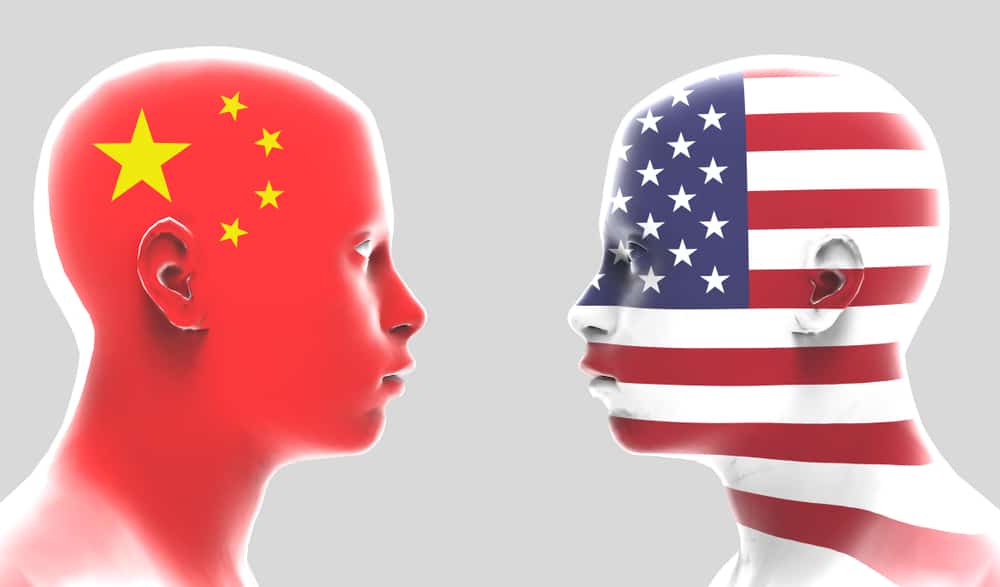


A recent RAND Corporation report questioned whether China’s military—the People’s Liberation Army (PLA) — is even ready for a conventional war. The report highlighted logistical inefficiencies, lack of combat experience, and organizational weaknesses that could hinder China in a traditional military confrontation. If Washington finds the report reassuring, it shouldn’t.
The United States is engaged in the wrong fight.
While policymakers focus on military buildups, aircraft carriers, and troop deployments, China is waging a war that doesn’t require a single soldier, tank, or missile.
This strategy was outlined in 1999, not in secret but in a book written by two Chinese military strategists. It’s called Unrestricted Warfare, and its premise is devastatingly simple: war in the modern age doesn’t require bullets and missiles. It can be waged through economic coercion, cyber infiltration, information control, and technological dominance. The strategists recognized that China could not triumph through conventional means, so it had to resort to more cunning tactics. That doctrine is unfolding in real-time, and America — distracted, complacent, and still clinging to outdated notions of power — fails to fully acknowledge it.
TikTok, WeChat, and the New Front Lines
Consider TikTok. With 170 million users in the U.S. alone, it has reshaped, and continues to reshape, how young people consume information. It’s also a precisely targeted weapon.
While debates rage about banning the app or forcing its sale to a U.S. company, the real issue is being ignored: the algorithm. Even if President Trump succeeds in forcing a sale, the algorithm — the lifeblood of TikTok — remains under Chinese control. That’s what matters. The algorithm determines what people see, what narratives spread, and what conversations are suppressed. (RELATED: The Odd One Out: Trump Delays TikTok Ban)
TikTok has already been caught shaping content to align with Beijing’s interests, from suppressing discussions on China’s human rights abuses to promoting divisive content that stirs social unrest. The influence is subtle yet sinister. In past wars, propaganda was broadcast through loudspeakers or printed in newspapers. Now, it’s embedded in your “For You” page, customized for each user, and calculated for maximum impact.
And then there’s WeChat. In the U.S., it’s used by roughly four million people, mostly Chinese Americans and expatriates. But it’s far more than just a messaging app. It’s an entire ecosystem — social media, payments, news, and communication — all controlled by Beijing. Chinese dissidents living in the U.S. have reported their accounts being censored or shut down. Conversations that should be private can be monitored. It is, effectively, a direct line from the Chinese government into the lives of its users, even those who fled China for freedom.
So what, many will say. I don’t use it. I don’t care.
Well, you should. WeChat isn’t just a risk to its users — it poses a threat to everyone. One interaction with the app can compromise an entire device. Spyware doesn’t need permission; it spreads silently, much like a virus.
A corporate executive receives a WeChat message from a colleague. It seems routine, nothing suspicious. However, that single exchange is enough to set the proverbial ball rolling. The app exploits a vulnerability, and suddenly, the executive’s phone is compromised. Emails, financial records, and sensitive documents are all exposed. Now consider the stakes if that executive is in government, defense, or a critical industry. Just one weak link is all it takes.
This isn’t tin-foil-hat-wearing hysteria; it’s a documented strategy. Cybersecurity experts have tracked China’s use of these methods. Hacked phones become listening devices, and cameras activate remotely. WeChat masquerades as a messaging app. In reality, it’s a tool for espionage.
Once again, to emphasize, millions across the country use WeChat. Many interact daily with those who don’t. This turns every compromised phone into a potential infection point — one that can silently infiltrate networks and institutions before anyone notices the damage.
And if that wasn’t bad enough, Tencent, the company behind WeChat, is an arm of the Chinese state. At least 23 percent of its employees are confirmed CCP members. When Beijing demands data, Tencent provides it immediately. There is no resistance, no questions asked.
Infiltrating American Infrastructure
Beyond social media, China’s war strategy reaches into American infrastructure — right under our noses. The rise of electric vehicles (EVs) is one example. While EVs are sold as the clean, efficient future, they double as sophisticated data-harvesting machines. Cameras, sensors, and GPS tracking log every movement, every charging stop, and every driving habit.
China is more than a participant in the EV market; it dominates. This dominance goes beyond traditional EVs to include the rapidly growing robotaxi sector as well.
Take WeRide and Pony.ai, two autonomous vehicle companies aggressively expanding in the U.S. These companies operate fleets of robotaxis equipped with high-resolution cameras and microphones that capture 360-degree surveillance. On the surface, they’re just mapping roads and improving navigation. In reality, however, they capture vast amounts of data — video, audio, geolocation — across American streets. While transporting passengers, they systematically scan entire cities, infrastructure, traffic patterns, and even pedestrian behavior. If TikTok’s data pipeline to China is alarming, what about a fleet of self-driving cars mapping every inch of U.S. streets in real time?
AI and the War for Information
And we haven’t even discussed DeepSeek yet.
The days of typing queries into Google and skimming through links are fading. AI models like ChatGPT and DeepSeek are replacing them. These systems not only retrieve information; they also curate, synthesize, and ultimately control what people see. (RELATED: The Promise and Peril of DeepSeek)
Unlike search engines, which at least offer the illusion of choice, AI-driven models eliminate friction. They deliver answers, not options. These answers are shaped by the biases, safeguards, and political directives of whoever controls the model. While Google and Safari already steer narratives through selective indexing and downranking, DeepSeek represents something even more potent: China’s ability to frame the picture for billions of users, dictating what is true, false, relevant, or irrelevant without their even realizing it.
China fully understands that controlling information is more important than controlling armies. A missile can level a city, but an AI model embedded in daily life can rewrite reality itself. This is the new battleground. Here, dominance is measured not by firepower, but by the narratives that people accept as absolute truth.
As Pentagon analysts strategize potential naval battles in the South China Sea, Beijing continues to infiltrate American life at all levels — digitally, economically, and psychologically. This is the art of unrestricted warfare.
READ MORE from John Mac Ghlionn:
Omidyar: The Shady Anti-Trump Billionaire
Can Jeff Bezos Save James Bond?
Trump Closed the Door on Cheap Chinese Imports. Temu Found an Open Window.




















