
The American Spectator

home
ADVERTISEMENT
Print Email
Text Size

The Environmental Spectator

How’s the Fishing?

Earth Day 2009 brings some good news from the world’s fisheries.

“Crematorium to help heat homes in Swedish Town” was the headline in a December 20, 2008 story in the Telegraph (UK). The town of Halmstead decided that just dying wasn’t enough to reduce one’s environmental footprint.

“Of course, it’s possible that there will be some discussion about the ethics of this, but from our side, this is a purely environmental idea,” said Lennart Andersson, director of the local cemetery. “There will be no difference in the ashes.”

Arne Naess, a Norwegian philosopher and founder of the “deep ecology” movement, passed away on January 12. According to Patricia Sullivan, who wrote Naess’s obituary for the Washington Post, “a deep ecologist would clean up a pond because plants and animals deserve a pristine habitat and the woods should be allowed to evolve at their own rate. A shallow ecologist would preserve the pond so his children have a nice place to swim and the watershed quality improves.”

Setting aside, for a moment, the view that being concerned for one’s children and water quality might be viewed as “shallow,” can’t one be concerned with both nature and human beings?

It is another Earth Day, and, as in previous such columns on this site, yours truly continues his quest for good news for both man and animal in the hopes of raising your spirits amidst various and sundry claims of global collapse emanating from certain circles. If a cemetery director in Sweden can find the environmental light at the end of his tunnel, well, so can I.

Of course, there are real problems out there. A very big one is the collapse of the oceans’ fisheries. It is truly a classic example of the Tragedy of the Commons. Yet, this is a policy area in which some creative market- or incentive-based programs are beginning to gain purchase throughout the world. There seems to be greater acceptance of something like a property rights regime, subject to overall regulation of the total catch, as a means to relieve pressure on the fisheries while enhancing the economic position of the fishermen.

Researchers from the University of California at Santa Barbara and the University of Hawaii published a study in the September 19th issue of Science that showed that a strategy called “catch shares” can reverse fisheries collapse. Catch shares are common in New Zealand, Australia, Iceland and are starting to come on line in the U.S. and Canada, too. They guarantee each shareholder a fixed portion of a fishery’s total catch that is set each year by scientists. These shares can be bought and sold and become more valuable as the fish population, and the total allowable catch, increases. In other words, the owner of the catch shares now has an interest in a thriving fishery over the long term.

Traditional fisheries are “open access,” which results, basically, in a race to catch the last fish.

The researchers surveyed 11,000 fisheries. They found that, while nearly a third of open-access fisheries have collapsed, the number is only half that for fisheries managed under catch share systems. Moreover, they were able to demonstrate that catch shares reverse the overall decline in the fisheries, strengthening them over time.

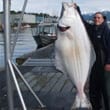
In 1995 the Alaskan halibut fishery was converted to Individual Transferable Quotas (ITQ), a variety of catch shares. At that time the total season had dwindled from roughly four months down to just two or three days. Given the compression on the season, fishing crews rushed, took risks, overloaded boats, and processing facilities and lost money.

Today, the halibut season lasts almost eight months. Boats now haul in fresh, undamaged fish in manageable quantities with the price per pound significantly larger.

“Halibut fisherman were barely squeaking by-but now the fishery is insanely profitable,” says Steve Gaines, Director of the Marine Science Institute at the University of California, Santa Barbara, and one of the authors of the study.

No one ever washed a rented car, right? Since the fishing operations now have a defensible, excludable, transferable claim or right to a share of the catch, they can manage the fishery in a responsible and profitable manner, which is good for them and for the fish. Not for them any false dichotomies between deep and shallow ecology.

About the Author

G. Tracy Mehan, III served at the U.S. Environmental Protection Agency in the administrations of both Presidents Bush. He is a consultant in Arlington, Virginia, and an adjunct professor at George Mason University School of Law.

Letter to the Editor View all comments (20) |

Pingback| 4.22.09 @ 7:27AM

How’s the Fishing? links to this page. Here’s an excerpt:

…to a share of the catch, they can manage the fishery in a responsible and profitable manner, which is good for them and for the fish. Not for them any false dichotomies between deep and shallow ecology. Read More Share and Enjoy: Related posts: Tax Freedom Day Happy Tax Freedom Day!  The good news — Tax Freedom... Is sports betting coming to a Delaware casino near you? Love it or hate it, it seems the ball…

owyheewine| 4.22.09 @ 9:13AM

Cap and trade for fish oil. What a deal.

Pingback| 4.22.09 @ 9:26AM

Topics about Swedish » Blog Archive » How’s the Fishing? links to this page. Here’s an excerpt:

…a demo video.) » read more... Build Websites Faster! - Over 30 generators, tools and scripts for webmasters and web designers. » read more... How’s the Fishing? Posted on Apr 22, 2009 05:07:00 AM The Woohoo! Report put an intriguing blog post on How’s the Fishing? Here’s a quick excerpt "Crematorium to help heat homes in Swedish Town" was the headline in a December 20, 2008 story in the…

Pete| 4.22.09 @ 10:41AM

Sounds like a decent idea, in theory. However, it really depends on whose "scientists" are setting the limits, right? Are they "global warming" scientists with an agenda and money coming to them on the back end or pure numbers people? Time will tell I suppose.

Andy| 4.22.09 @ 1:00PM

I think this is a terrible idea. This is a form of welfare. The gov't "grants " to individuals property rights, in this case shares of the fish population, that are thus precluded from the general public. Fishermen presently engaged are given these rights, and new entrants blocked unless a purchase of an existing franchise is made. This has been done before, in the tobacco growing industry with allotments.

A more free market solution might be to have annual licenses for a share of the catch be auctioned. The population and catch are annually estimated, bidders may bid for a share of it via sealed bid, with no single bidder being awarded more than 3-5% of the estimated catch. Highest bids are accepted until the full estimate is achieved. This allows for income to the gov't, market principles rule, and there is fairness to all.

Chilly| 4.22.09 @ 1:49PM

The IFQ halibut fishery is/was a terrible idea. Before the IFQ's, the fishery was a 24 hour opener where the majority of the fishermen went to "outside waters", offshore where the halibut stocks were abundant. Their catch was used to determine how many pounds they were "allotted" under the IFQ permit. After they received the IFQ, they no longer had to go to the productive offshore waters and began fishing inshore where the sports fishermen fished. They didn't waste their efforts in these waters prior to the IFQ, because they knew there wasn't enough stock in these waters to produce any wealth in the short openers prior to the IFQ, and they needed to fish offshore where the bulk of the stocks live, in order to catch enough poundage of halibut which would then be allotted to them in the IFQ permit they knew was going to be instituted.

The result since the IFQ permits were given, is now the inshore waters used by sport fishermen has been depleted. The commercial halibut fishermen want to blame the charter boats for this depletion, but there were abundant halibut in these waters prior to them being given the IFQ permits, but this stock just couldn't withstand the additional stress of halibut longliners with thousands of baited hooks, who decided not to waste time and fuel going offshore where they "qualified the IFQ" for the poundage they were allotted, and fished inshore.

I know this as I am a lifelong (60 years) resident of southeast Alaska, and have witnessed the ruination of the inshore halibut sports fishery after the IFQ permits were instituted. I have witnessed the boats fishing the inside waters, and watched the inside fishery disappear!

They made one major mistake in this, there should have been a rule that the IFQ permits had to be fished where they were qualified! The fishermen receiving these "PERMITS", should not have been allowed to catch their allotted poundage of halibut in the less productive areas, where theadditional commercial pressure quickly wiped out stocks of not only halibut, but also the rockfish that are an incidental catch of these longlines.

I would give anything to be able to go back and fight the implementation of the IFQ program! Now I with my small boat can't catch halibut in the safety of the inshore waters, but must run the sixty miles to the offshore waters. Does this sound like as good of a deal as the author implies? I suggest maybe a litte more research as to the problems might give a more fair and balanced viewpoint.

Thanks for the ability to comment on this and be able to point out the unintended consequences of this program to the ordinary citizen, who doesn't have a powerful lobby representing their interests.
Chilly

Pingback| 4.23.09 @ 7:27AM

Greened to Death links to this page. Here’s an excerpt:

…rate tax rates tax return tax revenue uk tax Recent Comments Greened to Death April 23, 2009 CAPITALISM IS GREEN Re: Bill Croke’s Happy Earth Day Vladimir Ilyich:and G. Tracy Mehan, III’s How’s the Fishing?: Shoot a moose; save the planet! A full-grown moose belches and farts the methane equivalent of 2,100kg of carbon dioxide a year — equal to about 8,000 miles of car travel. Shoot a moose and…

look | 8.27.09 @ 1:25PM

I am going to share a secret with you.In www.merryugg.com, I saw good UGG boots in it.The Classic Cardy is made of soft sheepskin with a rubber ridged bottom and sheepskin fleece inside. I am not a fan of fleece in general because usually it makes my feet too warm unless I am in very cold temperatures. But this fleece didn’t do that. It is the strangest thing. These Classic Mini boots know what the weather is and sort of adjust like a thermostat to your body temperature.

More Articles by G. Tracy Mehan, III

More Articles From The Environmental Spectator

http://spectator.org/archives/2009/04/22/hows-the-fishing

ADVERTISEMENT

SPONSORED LINKS

FLASHBACK TO: 1995

Clip of the Day

Most Popular Articles

Obama and the IRS: The Smoking Gun?

Jeffrey Lord | 5.20.13

The Inoperative Jay Carney

Jeffrey Lord | 5.23.13

Holding AWOL Obama Accountable

Betsy McCaughey | 5.23.13

Obama's Imbroglios

R. Emmett Tyrrell, Jr. | 5.23.13

Lerner's Plea

Ray V. Hartwell | 5.23.13

Time to Go for the Kill

Peter Ferrara | 5.22.13

Laying Down My Pen

Quin Hillyer | 5.23.13

ADVERTISEMENT













