
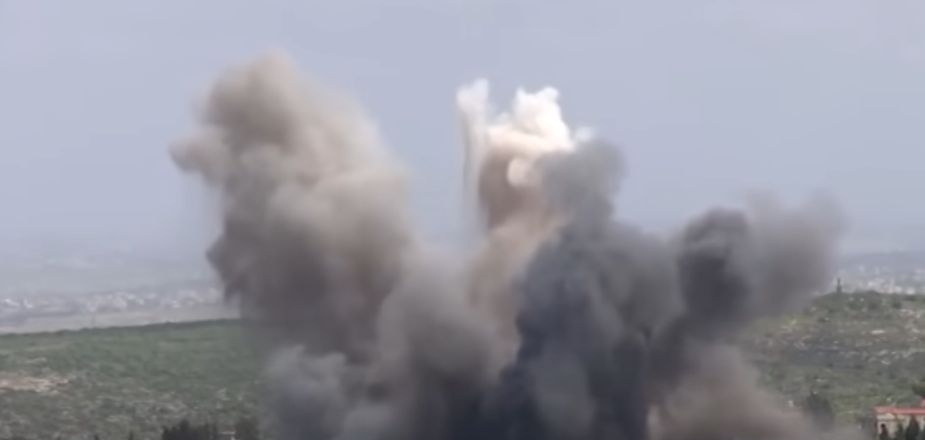


The ground war in Gaza has stolen recent headlines as the Israeli Defense Force (IDF) initiates advances into Rafah — Hamas’s stronghold in southern Gaza — amidst concerns over humanitarian aid to civilians and futile attempts by President Biden’s administration to dissuade the advance by withholding arms shipments to Israel. Meanwhile, Israel’s war in the north and West Bank has escalated.
But in the end, it will not be the first time Israel has managed a multi-front war and succeeded.
Over the past two weeks, Hezbollah has unveiled a sophisticated arsenal and significantly increased attacks on Israeli towns and IDF positions in northern Israel. All of this while the IDF’s counter-terrorism activity in the West Bank has turned into full-blown military operations with aerial support and numerous firefights throughout Palestinian-controlled cities. (READ MORE from Bennett Tucker: US and Israel’s Humanitarian Mission to Gaza)
Israel’s northern border came under attack on October 8 when Iranian-backed Hezbollah Radwan Forces in southern Lebanon began launching rockets and artillery at civilian towns in solidarity with Hamas’s terrorist attack the previous day. The IDF responded by knocking out rocket launch sites and military compounds in southern Lebanon. By the end of October, 80,000 Israelis had evacuated the Galilee and Golan Heights amidst steady tit-for-tat artillery and rocket exchanges and the looming threat of a ground invasion.
Tactics changed at the start of January when a precision IDF strike in southern Beirut killed Hezbollah leader Saleh al-Arouri. Hezbollah then expanded its targets to include IDF military installations in the Galilee which prompted the IDF to strike deeper into southern Lebanon forcing the Radwan forces to withdraw north of the Litani River.
In early May, the Lebanese newspaper Al-Akhbar reported that Iran ordered Hezbollah to escalate attacks “even at the cost of starting an all-out war.” Despite the questionable credibility of the Hezbollah-sponsored newspaper, Israeli residents and soldiers in the north have seen an unprecedented escalation, from an average of 30 rockets per day to over 100. This from an Iranian-stocked arsenal that now includes anti-tank missiles and suicide drones, in addition to the usual Katyusha rockets.
On the afternoon of May 14, a local alert network sent text messages to subscribers throughout Israel warning that “the north is being pounded by Hezbollah today.” This came following a barrage of over 100 rockets and 40 suicide drones that caused infrastructure damage to IDF bases, ignited forest fires, and inflicted injuries to civilians in the town of Metula. “At 13:38 we attacked a post in Metula using an attack drone that carried two S5 missiles,” Hezbollah claimed. “After launching them [the missiles] at the selected targets, the drone completed the operation and ‘suicided’ on the designated target.”
Hezbollah has repeated similar attacks in recent days, averaging 100 rockets and 40-50 drones. May 22 saw a significant barrage that included guided missiles at IDF radar installations and Iron Dome positions on Mount Meron, five miles south of Lebanon. The Iron Dome still intercepts the majority of projectiles, but an alarming number have found targets, destroying several houses, starting wildfires, and causing power outages across northern Israel. The escalation has given agency to a recent statement made by the former head of Lebanon’s Progressive Socialist Party, Walid Jonblatt: “We are only at the beginning of the war with Israel.”
The tension in the northern air is almost palpable as both sides have shown relative restraint compared to their full capabilities while waiting for the other to initiate a ground invasion. While Israel’s north gets pounded, the West Bank has also experienced an increased level of military clashes between the IDF and terrorist cells.
The White House’s stance opposes “actions that undermine stability in the West Bank and the prospects of peace and security for Israelis and Palestinians alike. This includes attacks by Israeli settlers against Palestinians and Palestinian attacks against Israelis.” But President Biden’s recent executive order to impose sanctions on leaders of Israeli “settler” groups who inflict violence on Palestinians overshadows the full military mobilization of Islamic terrorist cells — such as Palestinian Islamic Jihad, Lion’s Den, al-Aqsa Martyrs, and other “Brigades” affiliated with Hamas and armed and funded by Iran — that significantly undermine regional peace.
Incidents in the West Bank and around Jerusalem range from lone-wolf actors carrying out shootings or stabbings on Israeli uniformed personnel or civilians, to strategic, intelligence-informed IDF counter-terrorism raids in Palestinian-governed cities that erupt into full-scale firefights with the local terrorist militias.
On May 4, for example, the IDF carried out a counter-terrorism raid in the Arab West Bank city of Tulkarm backed by reinforcements and bulldozers that quickly escalated into a firefight with a Hamas cell. According to IDF spokesman Daniel Hagari, the cell was “responsible for the murder of an Israeli reservist, the injury of other civilians, and the planning of imminent and additional terror attacks against Israel communities.” During the raid, the IDF destroyed laboratories for manufacturing explosives, confiscated weapons, and apprehended terrorists.
A similar operation was carried out ten days later when the IDF targeted employees of the Qatari Gulf Exchange Company with ties to terrorism that quickly escalated into fierce firefights with the Palestinian Islamic Jihad in the cities of Ramallah, Bethlehem, Jericho, Nablus, and Tulkarm. The following day Jordanian officials apprehended smugglers trying to bring Iranian shoulder-launched rockets from Syria through Jordan to the Jihad strongholds in West Bank cities. (READ MORE: Iran’s Tactics and Targets Open a New Chapter in the War)
Earlier this week, the IDF clashed with Lion’s Den, al-Aqsa Martyrs, and the Hamas cell Islamic Resistance Movement in the cities of Jenin and Nablus that resulted in arrests of several key terrorist operatives and ten reported killed. The “Jenin massacre,” Hamas asserted, “will not weaken the steadfastness of our people and will not stop their Resistance.” Clashes in Jenin reignited on May 21 after Hamas operatives fired improvised explosive devices (IEDs) at IDF positions which escalated into twenty-four hours of full-scale urban warfare, including IDF air support.
These escalations should come as no surprise. As Israel pours resources into its Gaza campaign, escalations on other fronts, according to Hezbollah Secretary General Hassan Nasrallah, serve to “divert [IDF] forces, weapons and equipment [away] from Gaza.” With each front enfranchised by Iran, the strategic groundwork has been laid for attacks to continue against Israel irrespective of a ceasefire agreement in Gaza. When the Gaza war is over, many fear that the real war against Hezbollah and proxy cells in the West Bank will commence. But in the end, it will not be the first time Israel has managed a multi-front war and succeeded.



















