
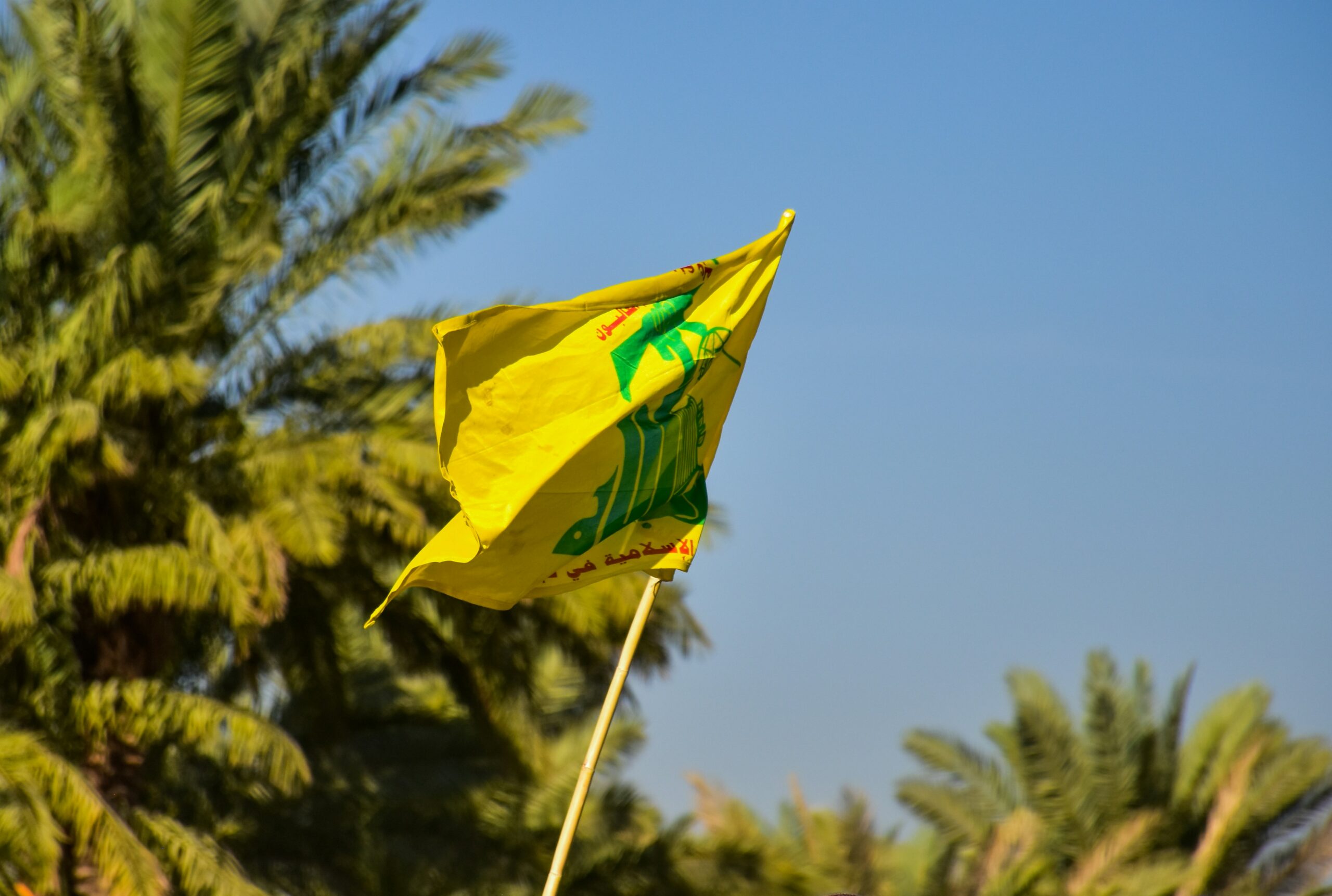


Lebanese efforts to disarm Hezbollah continue at a glacial pace. Lebanese Prime Minister Nawaf Salam stated that the first phase of Lebanon’s plan to disarm Hezbollah south of the Litani River will be completed “soon.” Additionally, the Lebanese army has pledged to document Hezbollah’s disarmament. Nice promises.
Granted, Lebanon has had some measured success against Hezbollah. The army now has about 10,000 troops near the border with Israel, has closed 11 smuggling routes along the Litani River, and has “huge amounts of unexploded ordinance” formerly held by Hezbollah. In April, Lebanon arrested several terrorists who fired rockets into Israel. More recently, Lebanon arrested an infamous drug lord sanctioned by the U.S., who reportedly has ties to both Hezbollah and the former Assad regime in Syria.
But the fact remains that Hezbollah continues to violate the Hezbollah-Israel ceasefire with impunity — over 1,900 times since its inception in November 2024, according to the IDF. So in response, Israel is doing most of the heavy lifting. Israel has eliminated over 380 Hezbollah terrorists since November 2024, a feat likely impossible for Lebanon. Since October 2025, the IDF has killed at least 40 Hezbollah terrorists. (RELATED: Israel Finds Peace Through Strength as Lebanon Neglects Trump-Brokered Deal)
This month, the IDF killed Hussein Mahmoud Marshad al-Jawhari in the Ansariyah area of Lebanon. Al-Jawhari was a leader in Iran’s Quds Force (Unit 840) and operated under Iran’s Islamic Revolutionary Guard Corps (IRGC). The IDF also eliminated Ali Abdullah and two other Hezbollah operatives near Sidon. All three were planning attacks on Israeli forces, and the IDF confirmed that Abdullah also served in Lebanese military intelligence, bringing into question to what extent Lebanon has been infiltrated by the terrorist organization as the country continues to profess that it is committed to Hezbollah’s disarmament. Israel also killed Zakaria Yahya al-Hajj in the Jwaya area in southern Lebanon. Al-Hajj was a key figure in infiltrating Lebanon’s security apparatus and acting against critics of Hezbollah within Lebanon. As part of his role, he activated agents within Lebanon’s security systems and suppressed criticism by opponents of Hezbollah in Lebanon. Additionally, Israel eliminated a Hezbollah terrorist who attempted to re-establish the terror group’s infrastructure in the Yeter area, and a second Hezbollah terrorist in the Bint Jbeil area who worked to seize private assets for Hezbollah’s use.
In November, Israel killed Haytham Ali Tabatabai in the Beirut area, after having survived multiple assassination attempts by Israel in the past. Tabatabai was in the process of re-establishing Hezbollah’s terror network in southern Lebanon. Tabatabai was Hezbollah’s chief of general staff, who was integral in developing and commanding Hezbollah’s elite Radwan Force, which was tasked with invading Israel in an October 7th-style attack, an attack which was foiled by counterterrorism operations by the IDF. He also led Hezbollah’s operations in Syria and Yemen and was seeking to rebuild Hezbollah. In October 2016, the U.S. Department of State designated Tabatabai as a Specially Designated Global Terrorist, and at one point, the United States was offering a $5 million reward for information on his whereabouts.
In November, Israel killed Muhammad Ali Hadid, a commander in Hezbollah’s Radwan Force, in the Nabatieh area, southern Lebanon, who was also looking to re-establish Hezbollah’s terror infrastructure. Hadid had advanced numerous terror attacks against Israel. Israel also eliminated Hussein Jaber Dib, another terrorist from Hezbollah’s elite Radwan Force.
Also, last month, Israel killed Kamel Reza Karnabsh in the Mayfadoun area in southern Lebanon. Karnabsh was also attempting to re-establish Hezbollah in Lebanon. Israel also eliminated a Hezbollah terrorist in Houla in southern Lebanon who was involved in coordinating Hezbollah’s military and financial assets, and was also involved in stealing private assets for the terror group’s use.
Also in November, Israel killed 13 Hamas terrorists during a strike on a Hamas training compound in Ain al-Hilweh, southern Lebanon. The training compound had been embedded inside a civilian area. One of the terrorists who was killed was Jawad Sidawi, who was preparing terrorist attacks from Lebanon to Israel. Israel also killed two terrorists from the “Lebanese Resistance Brigades,” a terror group that serves under Hezbollah, in Chebaa in southern Lebanon. They were smuggling weapons for Hezbollah.
And also last month, Israel also eliminated two Hezbollah terrorists in the At Tiri and Bint Jbeil areas of southern Lebanon who were trying to rebuild Hezbollah in those locations. Israel also killed a terrorist in Blida in southern Lebanon who was observing casing IDF troops. Israel also eliminated Muhammad Ali Shuweikh, a member of Hezbollah in the Mansouri area in southern Lebanon who served as a military and financial liaison. Israel also killed Samir Ali Faqih, a Hezbollah weapons smuggler.
In October, Israel killed Muhammad Akram Arabiya, a commander in Hezbollah’s Radwan Force, in the Al-Qlaiaah area in southern Lebanon. Israel also eliminated Zayn al-Abidin Hussein Fatouni, a commander in the Radwan Force’s anti-tank unit. Israel also killed Abbas Hassan Karky, the logistics commander of Hezbollah’s Southern Front headquarters, in the Nabatieh area of southern Lebanon. Arabiya, Fatouni, and Karky were attempting to re-establish Hezbollah terrorist infrastructure in Lebanon. Israel also eliminated Ali Hussein Al-Mousawi, who purchased and smuggled weapons between Syria and Lebanon for Hezbollah. Israel also killed Abd Mahmoud Al-Sayed, a Hezbollah terrorist in Al-Bayada.
Israel’s attacks on Hezbollah degrade the terror organization beyond just killing terrorists. Recently, Israel was able to publicize that it uncovered and was able to neutralize Hezbollah’s covert maritime terror arm. In the past couple of months alone, Israel has destroyed weapons storage facilities, some of which are embedded in the civilian population, in addition to Radwan Force facilities, launch sites, launchers, and tunnel shafts.
Hopefully, more positive accomplishments of the Lebanese government’s war against Hezbollah will come to light soon. But in the meantime, the Trump administration should continue to allow Israel to act freely in preventing Hezbollah from reconstituting itself in Lebanon.
READ MORE from Steve Postal:
Is Selective Immigration the Key to Reducing Antisemitism?
Did Iran Orchestrate the Hanukkah Murder of Jews at Bondi Beach?
Syrian Detente Worthless As Country Still Harbors Terrorists



















