
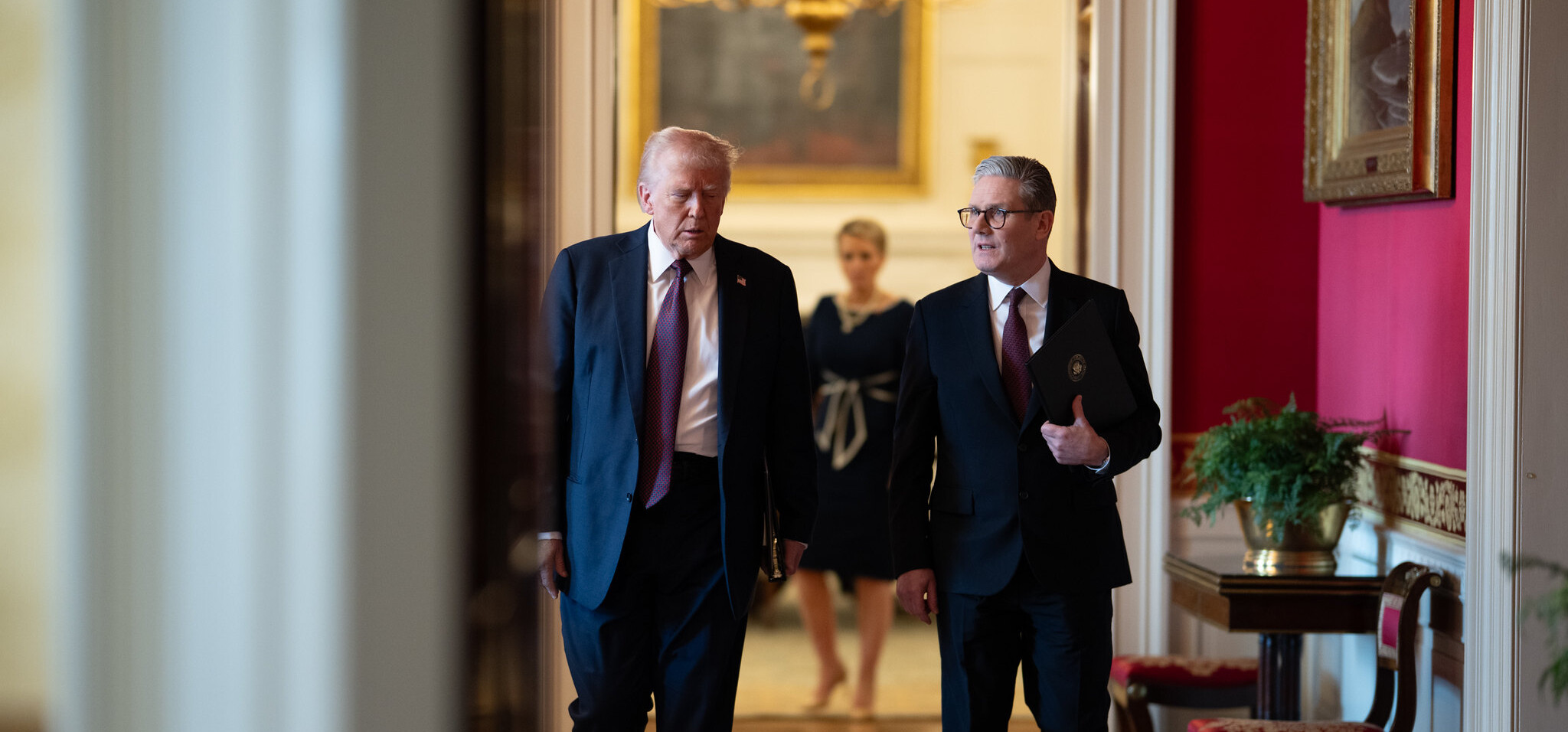


President Trump’s “Economic Prosperity Deal” with the United Kingdom is a calculated, pro-American trade breakthrough. The agreement delivers over $5 billion in new export opportunities for U.S. producers, specifically benefiting the industries that form the backbone of this country: agriculture, manufacturing, energy, and tech.
Trump’s team negotiated real wins. The U.S. will lower tariffs on up to 100,000 British cars from 27.5 percent to 10 percent, and eliminate duties on British aluminum and steel. In exchange, the U.K. is abolishing its 19 percent ethanol tariff under a 1.4 billion-liter quota. American ranchers, particularly in Texas, Nebraska, and Kansas, and ethanol producers across Iowa, Illinois, and South Dakota, will see a windfall — $700 million in ethanol exports and $250 million in beef and related farm goods.
For decades, U.S. agriculture has been under siege by unjustified “health standards” and non-scientific restrictions from foreign markets. Trump’s deal dismantles those excuses. Beef once rejected under arbitrary labeling rules will now enter British supermarkets. U.S. dairy and poultry exporters also gain an opening, with the potential to expand further under follow-up talks already underway. American farmers are finally being treated as essential partners in diplomacy, not as bargaining chips. (RELATED: The Liars Are Out in Force Thanks to the ‘Liberation Day’ Tariffs)
The aerospace industry is also getting a major boost. British-made Rolls-Royce Trent engines, key to Boeing aircraft, will now move freely across the Atlantic without tariffs. This protects a complex U.S. supply chain that employs tens of thousands of workers. The U.K.’s AviaCorp has agreed to purchase $10 billion worth of Boeing aircraft, creating ripple effects for suppliers in states like Washington, South Carolina, and Missouri. (RELATED: The Dismal Science and the Trumpian Tariff Hullabaloo)
The trade deal also unlocks major opportunities in the chemical sector. U.S. chemical manufacturers will now gain easier access to U.K. markets, bypassing many of the EU’s strict regulatory barriers. This is a major win for American firms producing industrial chemicals, pharmaceuticals, and advanced materials. Companies based in states like Texas and Louisiana — home to many of the country’s chemical hubs — are now better positioned to expand exports, partner with U.K. firms, and drive innovation across both economies.
After peaking at $12.3 billion in 2022, the U.S. trade surplus with the U.K. shrank to $10.1 billion in 2023, according to the U.S. Census Bureau. Trump’s deal stops the bleeding. It stabilizes one of our most important bilateral trade relationships and sends a message that the U.S. will no longer accept lopsided deals that punish American workers.
This trade model is familiar. Just as Trump rewrote NAFTA into the USMCA — protecting U.S. auto workers and expanding dairy access — this new deal follows the same formula: leverage, precision, and results. There’s no appetite here for open-ended promises or bureaucratic delay.
Contrast Trump’s deal with the Biden administration. Under Biden, taxpayer dollars went to U.K.-based diversity and inclusion programs, not trade. The U.S. gave out $25,000 to a U.K. group that offers legal help to LGBTQ asylum seekers, $40,000 to a book festival focused on identity politics, and another $20,000 to a pride concert. Whether or not one agrees with these values, they don’t create jobs or help American exports.
Now, Trump has filled that gap with substance. This agreement isn’t just another policy win — it’s a roadmap for how America reclaims economic leadership in the 21st century. The numbers speak clearly: $5 billion in new exports, $700 million in ethanol, $250 million in beef, zero-tariff aerospace cooperation, and a groundbreaking trade framework.
It’s not about “cooperation” for its own sake; it’s about defending U.S. interests, rewarding American innovation, and using smart leverage to deliver hard results. That’s how trade should work. And once again, Trump is the one making it happen.
READ MORE from Gregory Lyakhov:
School Choice Is Common Sense for Students



















