
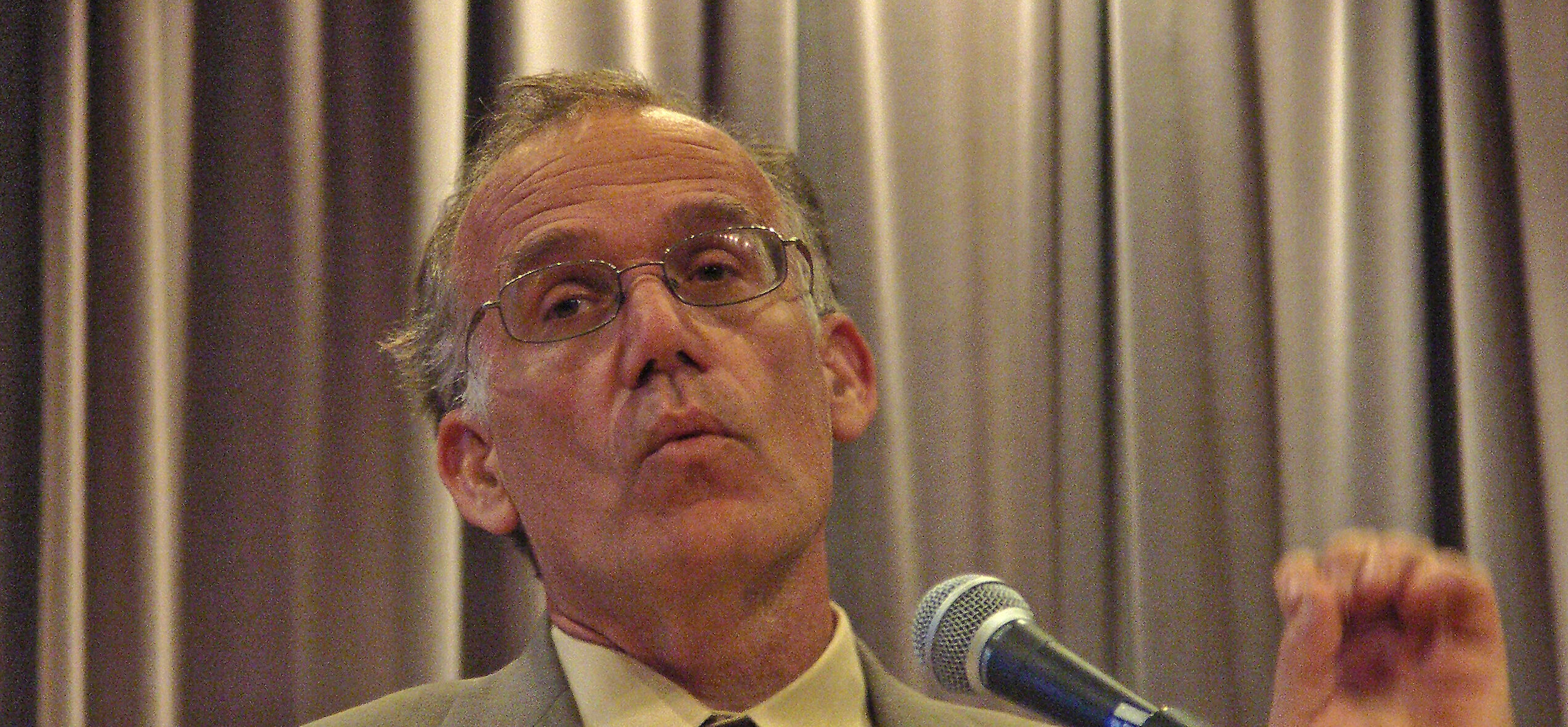


Starting off this week with a prayer for Victor Davis Hanson, whose powerful voice and calm reason have demonstrated the ongoing power of Western civilization to rise to the challenge of the day. May he be granted a swift and complete recovery.
May God grant Victor Davis Hanson many long years in good health to continue his sorely needed teaching.
As a part of the prayer, this is a deep dive into ideas that are dear to him and for which he has stood with constancy, courage, and eloquence.
Hanson and Fowler this week took up the argument that America is a Judeo-Christian nation. This thought used to be a staple. It was now necessary because of a newly voluble group who claim America is a Christian nation owing nothing to Judaism. Hanson has reluctantly taken up the fight against the most noticeable of those making this argument. Tucker Carlson, the most influential of this group, had long been a friend and an ally, and Hanson is a loyal friend.
But truth must be argued out in a free society, and as long as the debate is in good faith, all grown from it. VDH holds himself to good faith argument, without insult or invective. He has dedicated his life to the pursuit of truth, suffusing his words with the sense of the clean glow of his dedicated excellence. With the greatest of Americans, he knows that racism and antisemitism are built on lies, and he fights them passionately.
Here, it is antisemitism that has brought out the fight. It is plain to see that the arguments against Israel which Carlson has been espousing lately are part of a much larger project aimed at Jewish targets well beyond the politics of the Middle East and America’s foreign policy. Whether Qatari-bought pundits or homegrown and looking for clickbait, they depend on the calling up murky specters of monstrous conspiracies, claiming evidence but never producing it.
These top-heavy theories without enough evidential ballast to keep the boat from tipping raise Hanson’s disciplined ire. He patiently takes apart Carlson’s unsubstantiated insinuations with fact after fact. It is clear in the process that Hanson is pained that his respected colleague has embraced positions that cannot stand up to his empirical criticism.
Hanson exposed in particular the error of Carlson and others in repudiating Judeo-Christian culture. Their claim that America should be understood as exclusively Christian runs counter to the thinking of the Founders. Though almost entirely Protestant Christians, America’s Founders refused to allow the country to be so defined, and the influence of biblical and rabbinic texts was critically important in that. By excluding religious tests and a religious establishment, they aimed to preempt the religious wars that tore the Old World apart. They wanted a united continent, not another fractured Europe. If governments can stand between their citizens and God, they can insert themselves anywhere, and liberty would end.
Less than a century before America’s founding, Britain had its last revolution, expelling King James II for seeking to impose Catholicism on the country. Only a few decades prior to that Glorious Revolution, Britain had fought a long and bloody civil war that was fueled by religion: King Charles I and his episcopal church against the Scots Presbyterians and the English Puritans. Memories were fresh of the horrors of those days and the older memories of Bloody Mary burning Protestants at the stake shortly after her father, Henry VIII, had executed prominent English Catholics who had not supported his assertion to be supreme head of the Church of England.
The matter came to a head in Virginia in 1785, newly free from British rule. The legislature there took up a proposition to override the state’s constitutional provision barring endorsement of any particular religion or denomination. James Madison took up his pen in opposition and wrote a petition that gave voice to the majority in Virginia and then later in the Constitution and Bill of Rights.
In this petition, which Madison entitled “A Memorial and Remonstrance,” he wrote:
The Religion then of every man must be left to the conviction and conscience of every man; and it is the right of every man to exercise it as these may dictate. This right is in its nature an unalienable right. It is unalienable, because the opinions of men, depending only on the evidence contemplated by their own minds cannot follow the dictates of other men: It is unalienable also, because what is here a right towards men, is a duty towards the Creator. It is the duty of every man to render to the Creator such homage and such only as he believes to be acceptable to him. This duty is precedent, both in order of time and in degree of obligation, to the claims of Civil Society. Before any man can be considered as a member of Civil Society, he must be considered as a subject of the Governour of the Universe: And if a member of Civil Society, who enters into any subordinate Association, must always do it with a reservation of his duty to the General Authority; much more must every man who becomes a member of any particular Civil Society, do it with a saving of his allegiance to the Universal Sovereign.
These powerful words owe much to John Locke. But this stream of thought began even earlier than Locke. It entered English politics decisively in the early 1600s, spearheaded by the peerless scholar and Common Lawyer, John Selden.
Selden was an immensely talented scholar and lawyer. He started from a humble beginning and rose spectacularly to prominence as a leader of the parliamentary cause, against Charles I’s attempts to concentrate all political power in has hands.
Selden and many political thinkers in England and Holland at that time were Erastians. The Erastians believed that civil authorities were meant to rule the nation. Divine law authorized civil authority, and its teaching would instill the moral backbone within the citizenry necessary for a working political order. Only in the unique polity of Israel, for whom God was the civil as well as religious authority, did religion properly have political authority. The Erastians supplied texts from Christian scripture in support of that point, but they also made it on the basis of the Jewish law tradition, which had become a topic of serious study.
Thomas Hobbes made the argument strongly that Christians were not “subjected to … other Laws than those of the Common-Wealth.” Hobbes noted that for the Jews, the laws of Moses were entirely applicable, but by contrast “other Nations are [subject] to the Laws of their several Sovereigns, and all men to the Laws of Nature.” As for matters of religious doctrine beyond the civil order, Hobbes wrote: “There ought to be no Power over the Consciences of Men, but of the Word itself, working Faith in every one.”
In this thinking, Hobbes as well as his fellow Erastians, credited the deep influence of Hebraic sources, both biblical and rabbinic. As Eric Nelson writes:
The troika of Hebraism, Erastianism, and toleration, forged so powerfully in the Dutch Remonstrant controversy, would resurface almost identically in the ecclesiological debates surrounding the English Revolution.
In the Westminster Convention, convened during that revolution, the Erastians, following the leading arguments and parliamentary skill of John Selden, thwarted the plans of both Episcopalians and Presbyterians to establish theirs as the national church by virtue of divine law. In opposition, Selden argued that the seven laws of the Noahide Covenant are the only divine laws binding on all societies. It is up to the civil authority to make all other laws, including which style of worship might be endorsed by the state. But in light of it being a civil decision to make, Selden argued that toleration fits the civil order better than compelled uniformity, and the state’s legitimate control extends no farther than the civil realm.
Madison was clearly the heir to this line of thinking, including its deep Judaic roots. It also appears in John Adams’ thought. Adams’ Massachusetts constitution envisioned religious tolerance as necessary for the legitimate work of religion on which the state depends:
[From Article II]: “No subject shall be hurt, molested, or restrained, in his person, liberty, or estate, for worshipping God in the manner and season most agreeable to the dictates of his own conscience, or for his religious profession or sentiments, provided he doth not disturb the public peace or obstruct others in their religious worship.”
[From Article III]: “The happiness of a people and the good order and preservation of civil government essentially depend upon piety, religion, and morality, and as these cannot be generally diffused through a community but by the institution of the public worship of God and of the public instructions in piety, religion, and morality.
Adams admitted a deep admiration of Judaism in his correspondence with Thomas Jefferson, and countered Jefferson’s criticisms of it sharply. In a letter to Francois Adriaan van der Kemp, Adams gave full voice to the great role he believed Judaism played, not only in the American enterprise and but in civilization in general:
I will insist that the Hebrews have done more to civilize Men than any other Nation. If I were an Atheist and believed in blind eternal Fate, I should Still believe that Fate had ordained the Jews to be the most essential Instrument for civilizing the Nations. If I were an Atheist of the other Sect, who believe or pretend to believe that all is ordered by Chance, I Should believe that Chance had ordered the Jews to preserve and propagate, to all Mankind the Doctrine of a Supreme intelligent wise, almighty Sovereign of the Universe, which I believe to be the great essential Principle of all Morality and consequently of all Civilization.
In a letter to newspaper editor Mordecai Manuel Noah, Adams even expressed his wish of seeing the Jews return to sovereignty in their ancient home: “For I really wish the Jews again in Judea an independent nation.”
For his part, Madison had a working relationship with a member of the tiny Jewish community present in America in his day. Haim Saloman risked his life for the patriot cause, even escaping British occupied New York City with a death sentence on his head. Salomon was an accomplished businessman, and he devoted his skills to helping manage the unending financial crises of the revolution and then of the fledgling nation.
He also supported Madison personally, as Madison wrote in a letter to Edmund Randolph (c. 1782):
I have for some time been a pensioner on the favor of Haym Salomon…. The kindness of our friend near the coffeehouse is a fund that will preserve me from extremities, but I never resort to it without great mortification, as he obstinately rejects all recompense.
Perhaps the most powerful of all statements that belies the contention that American citizenship should have a religious test is George Washington’s letter to the Newport Jewish congregation, cited in this space before. Washington set out with great exactitude that the rights of citizenship that Jews and all others enjoyed did not belong to any group of citizens to dispense or withhold, but rather stemmed from Above:
It is now no more that toleration is spoken of, as if it was by the indulgence of one class of people, that another enjoyed the exercise of their inherent natural rights. For happily the Government of the United States, which gives to bigotry no sanction, to persecution no assistance, requires only that they who live under its protection should demean themselves as good citizens, in giving it on all occasions their effectual support.
Here we return to VDH, whose concerns align with Washington’s. Hanson repeatedly asks that those who enjoy America’s protection and live under it “should demean themselves as good citizens, giving it on all occasions their effectual support.” Those who asperse that as “Islamophobia” condemn themselves as standing against the deepest of American verities.
May God grant Victor Davis Hanson many long years in good health to continue his sorely needed teaching.
READ MORE from Shmuel Klatzkin:
Uncompromising Principles, Moderated Souls



















