


“Forty more days and Nineveh will be overthrown!” (Jonah 3:4), cried the prophet Jonah. His warning scared the devil out of the Ninevites. All the people from the king down prostrated themselves in repentance, averting the city’s doom.
[W]omen in Hollywood always had equality with men — in front of the camera, on the screen, as real women not fake men.
For seven years in this great magazine, I’ve been a Jonah, except predicting the destruction of Hollywood. But Hollywoodians, unlike the Ninevites, do not fear God, just white men. They did everything they could to banish us — from the writers’ room, from the screen and, to their shock, from the audience. They damned us, mocked us, villainized us, yet expected us to reward them for it. Because their ignorance of the screen art extended to the screen business, more specifically the end of it.
Only now, as their jobs collapse around them, are they heeding voices such as mine. A Breitbart article last week by John Nolte cites a new study showing the number of movies directed by women hit a seven-year low last year. Coincidence? I think not.
“In 2025, only nine of the top 100-grossing films were directed by women, the lowest since 2018, according to Paste Magazine. “This year, women accounted for 8.1 percent of the top 100-grossing films, a steep drop from last year’s 13.4 percent and still higher than 2018’s 4.5 percent.”
Nolte suggests men are better than women at the problem-solving challenges of directing. And of course he’s right. The work resembles that of a military command over hundreds of personnel and under changing situations. A script is but a vague battle plan requiring quick decisions on every deviation, and with actors and actions, these are unavoidable.
A classic example was Francis Ford Coppola’s realization on The Godfather (talk about studio pressure) that a line ad-libbed by actor Richard S. Castellano as Clemenza — “Take the cannoli” right after the scripted “Leave the gun” — enriched the scene. The combined line — “Leave the gun. Take the cannoli” — beautifully reflected the dichotomy of family and mob life. It became one of the most memorable bits in the masterpiece, the perfect union of art and theme. Fewer women are wired for this alchemy.
For instance, I don’t have to be Chuck Norris to know there were no women on the Delta Force team that captured Venezuelan dictator Nicolás Maduro and wife late last Saturday night with no casualties. They weren’t only all men, they were real men, including those in charge at Mar-a-Lago — President Trump, Secretary of State Rubio, Secretary of War Hegseth, Chairman of the Joint Chiefs of Staff General Dan Caine. Whereas military ops controlled by DEI-heavy weaklings and women — a Democrat specialty — such as Jimmy Carter, Joe Biden, Kamala Harris, Lloyd Austin, and Mark Milley — invariably end up with dead soldiers and enemy fighters dancing on their corpses.
It’s the same in Hollywood, except at least there the burning is of studio money instead of U.S. aircraft. The derailment of most modern films starts long before their direction — at their conception, already sabotaged by ideology. The problem is not female but feminist.
There were many great lady screenwriters in 20th Century Hollywood — Anita Loos (The Women, Gentlemen Prefer Blondes), Betty Reinhardt (Laura), Frances Goodrich (It’s a Wonderful Life, Easter Parade, Father of the Bride), Leigh Brackett (The Big Sleep, Rio Bravo, El Dorado), Fay Kanin (Teacher’s Pet), Nora Ephron (When Harry Met Sally, Sleepless in Seattle). The two differences between them and today’s harridan hacks is they tailored their work to male master auteurs — such as Otto Preminger, Howard Hawks, and Vincent Minneli — and they respected men.
Leigh Brackett’s scripts for Hawks helped iconize Humphrey Bogart (The Big Sleep) and John Wayne (Rio Bravo). Their successors couldn’t do this if they wanted to, which they very much don’t. They can only, and prefer to, emasculate the male icons they inherited, like Han Solo, Luke Skywalker, Indiana Jones, and James Bond.
Similarly, Nora Ephron’s rom-coms — another lost art for current male-bashing female writers — popularized non-macho everyman actors Billy Crystal and Tom Hanks into likable leading men, and pretty feminine girls like Meg Ryan into both female and male favorites. The Meg Ryan type no longer even exists. She was replaced by asexual girlbosses and ridiculous action heroines.
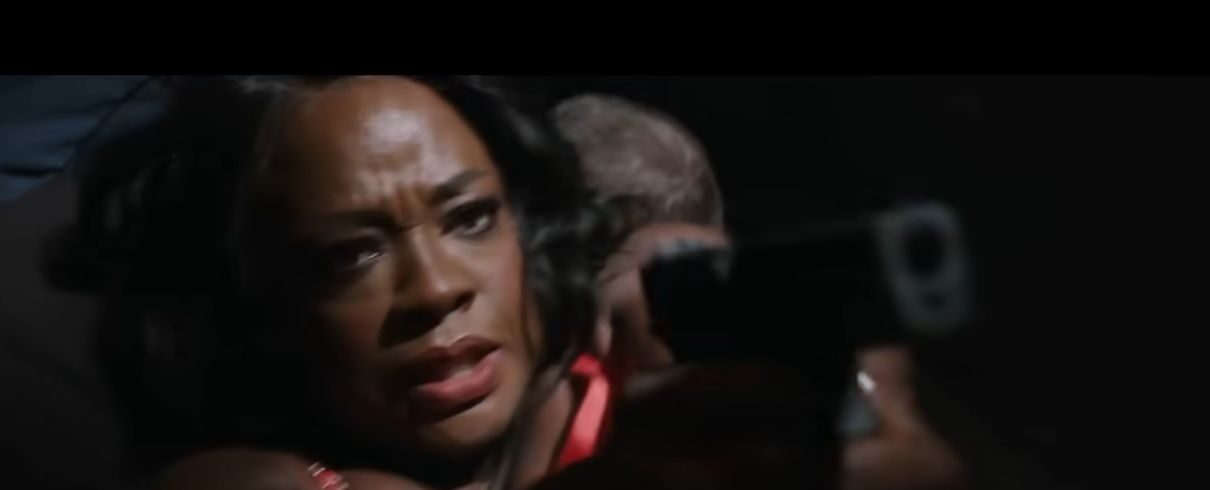
The most unintentionally laughable example of both is the recent G20 starring 60-year-old Viola Davis as the President of the United States doing a Steven Segal Under Siege number in a tank-top against white male terrorists twice her weight and half her age. “I don’t know who was working harder on this film,” remarked the Critical Drinker. “Davis just to get through the action set pieces without keeling over, or the stunt team to make it look like she could even do a fraction of this stuff for real.”
Of course the movie was a radioactive bomb, appealing to neither men nor women. Yet it got greenlit by MGM Amazon producer Courtenay Valenti, probably thinking, “Yeah, this’ll teach toxic white men something about black female empowerment.” There’s a good chance Valenti, the two G20 women writers (Caitlin Parrish, Erica Weiss) and the woman director (Patricia Riggen) are part of the involuntary female exile from Hollywood. Maybe their replacements will know what they didn’t. That women in Hollywood always had equality with men — in front of the camera, on the screen, as real women not fake men.
READ MORE from Lou Aguilar:



















