
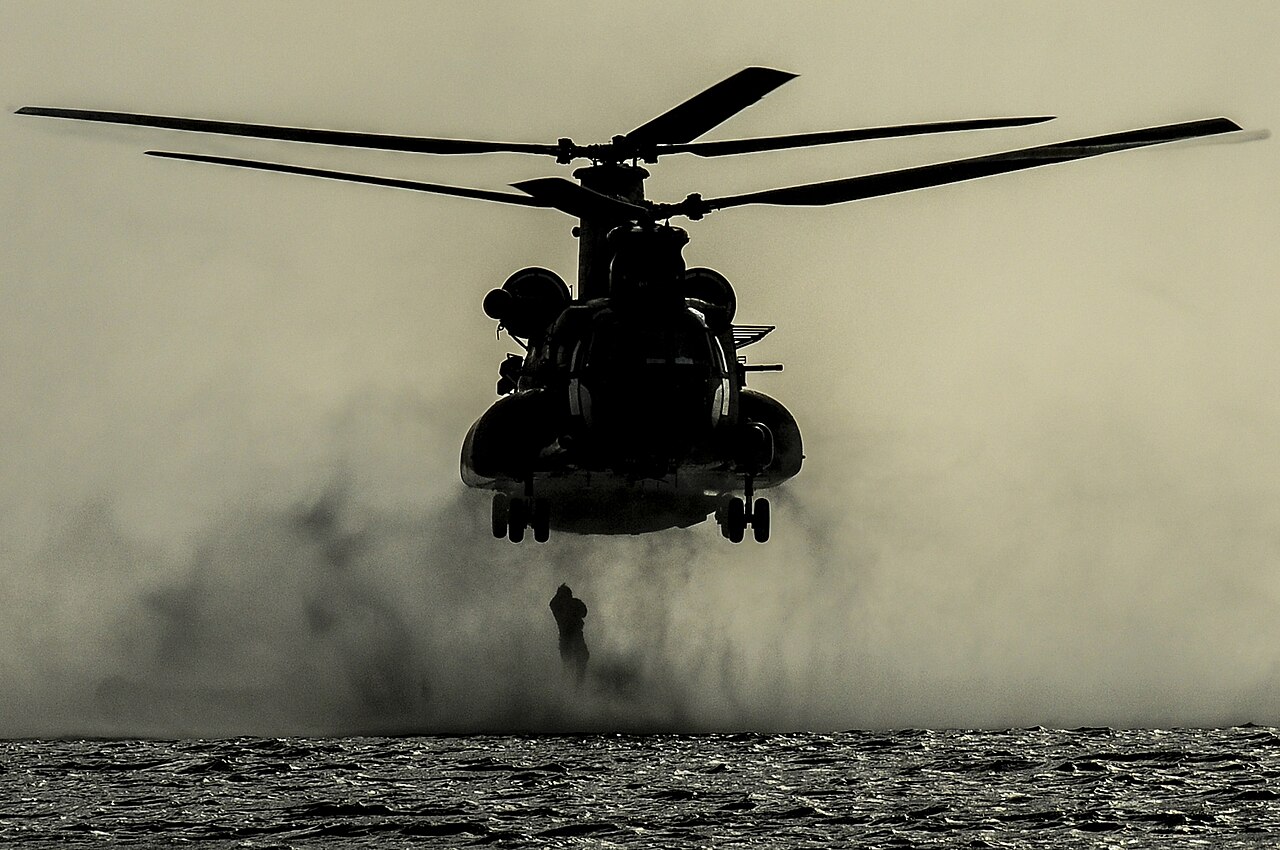


Delta Force captured Maduro, and SEAL Team Six shot Bin Laden, but it was the “Night Stalkers” of the U.S. Army 160th Special Operations Aviation Regiment (SOAR) who maneuvered through hostile radar, missiles, and gunfire to get the ground teams on target with new technology and tactics that are expanding the scope and reach of U.S. special forces.
“No other military in the world has anything like it,” says SEAL officer Robert O’Neill, who SOAR infiltrated into Pakistan to terminate Bin Laden. America’s growing capability for limited military operations in denied territory now allows policymakers to flip hostile regimes and gain key geopolitical objectives without large troop deployments that are invariably costly, messy, and often counterproductive.
Instead of exposing thousands of American soldiers to guerrilla warfare and terrorism in hostile environments that get the U.S. caught up in “endless wars,” it’s America that can now wield the initiative with hit-and-run assaults to change history, using small teams that have to be reliably inserted by air.
A U.S. air armada of 150 jet fighters, bombers, and electronic warfare planes had blinded or taken out Russian S-300 and BukM2 air defense batteries to clear the way for Maduro’s snatch on the night of January 3. But Iglas-S shoulder-launched SAMs in the hands of Cuban special forces and Colectivo militias, remained a dangerous threat to U.S. special forces flying low into Caracas.
Any repetition of the “Black Hawk Down” episode in Somalia, where the downing of three special forces helicopters led to savage urban fighting, could have turned into a political disaster for Trump, with far-ranging international consequences for the U.S.
But SOAR’s recently installed Directional Infrared Countermeasures embedded in the sensor cones of modified MH-60 Blackhawks and MH-47 Chinooks averted catastrophe when one or two Iglas-S were fired at them, according to Venezuelan military sources with access to after-action reports. High-intensity laser beams activated against heat-seeking warheads threw the missiles off course. One was seen falling harmlessly to the ground, according to the source.
Simultaneously, an MQ-1C Gray Eagle drone, catching the launch signature, instantly fired a Hellfire missile, incinerating an operator and his Manpad. “He’s now just a pile of burning bones,” an alarmed Colectivo member was overheard warning his mates in an intercepted call that was enough to make anyone else preparing to take a shot at the U.S. helicopters, ditch their Iglas instead.
A Chinook was damaged by machine gun fire, wounding the pilot and others on board. Despite his three bleeding wounds, the pilot, aided by the crew’s paramedic, completed the insertion of a Delta team and flew the limping chopper back to the USS Iwo Jima in a remarkable display of endurance and airmanship.
SOAR grew out of painful lessons learned from the disastrous 1980 attempt to rescue 50 American diplomats held hostage at the U.S. embassy in Iran…
SOAR grew out of painful lessons learned from the disastrous 1980 attempt to rescue 50 American diplomats held hostage at the U.S. embassy in Iran, which resulted in embarrassing failure due largely to inadequately prepared Navy helicopters and aircrews whose main previous experience was minesweeping.
“We need an organization that would include air force pilots, its own aircraft, and helicopters, otherwise we are not serious about combating terrorism,” Delta Force Commander Charles Beckwith told the U.S. Senate Armed Services Committee following the fiasco in which a helicopter refueling at a desert staging point accidentally exploded.
Hundreds of millions of dollars were soon allocated for an Army Special Operations Squadron with its tailored fleet of modified Blackhawks, Chinooks, and MH-53 Pave Lows fitted with the high-tech gear of fighter jets. GPS-guided inertial navigation, thermal imaging, terrain following radar, and “all kinds of neat stuff,” according to a Pentagon analyst, enable them to fly low through rugged terrain in darkness under any conditions.
The Squadron grew into a regiment with its own midair refueling tankers consisting of modified C-130 “Talons” to pump gas into special forces helicopters newly equipped with fixed fuel probes. “It was a revolutionary new concept for the air force,” said Gen. Sam Wilson, a onetime Pentagon spy chief and SOAR backer.
Night Stalkers are carefully selected. “They need to have the daredevil instincts of a top gunfighter jockey but must also like flying slow and low, which is a rare combination in a pilot,” Wilson said. “They also have to be tougher than most pilots and feel comfortable flying in darkness with night vision goggles.”
During the 1991 Gulf War, SOAR infiltrated Delta Force teams deep into Iraq to hunt for Saddam Hussein’s mobile Scud missile launchers, together with the British SAS, whose RAF 7th Air Squadron Chinooks lacked SOAR’s capabilities.
Night Stalker Tom Trask flew his Pave Low three times into Iraq in one day, evading Iraqi helicopter gunships but getting locked by the quick acquisition radar of a French Roland SAM battery, which fired. “We could feel the missile shoot right over us while I dropped down to ten feet above the ground to stay beneath it,” he recalls.
“SOAR pilots are the best in the world,” according to O’Neill. When the Blackhawk inserting him crashed into an interior wall of Bin Laden’s compound, another quickly hovered in for his exfiltration. “They can fix problems in fifteen-second time windows,” he says. “They are the most professional silent warriors we have.”
AC-130 gunships armed with 30 mm Gatling guns and 105 Howitzers that direct sustained fire with surgical precision on ground targets also form part of the 160 regiment. They recently annihilated an entire convoy of Russian Wagner mercenaries threatening a U.S. base in Syria, took out snipers in high-rise buildings during the 1989 Panama invasion, and now have Caribbean drug boats in their crosshairs.
SOAR may soon be in Iran, where the Special Forces catastrophe 45 years ago led to its creation. Whether it’s maneuvering around rugged mountains along Kurdistan’s border to secretly assist insurgents fighting the Ayatollahs or direct action strikes on their bunkers in Tehran, the 160 may play a central role in operations contemplated by Trump. “With SOAR, we can do it in Iran this time,” says O’Neill.
READ MORE from Martin Arostegui:
The Delusional Policies of the EU Nomenklatura
Image licensed under Creative Commons Public Domain Mark




















