
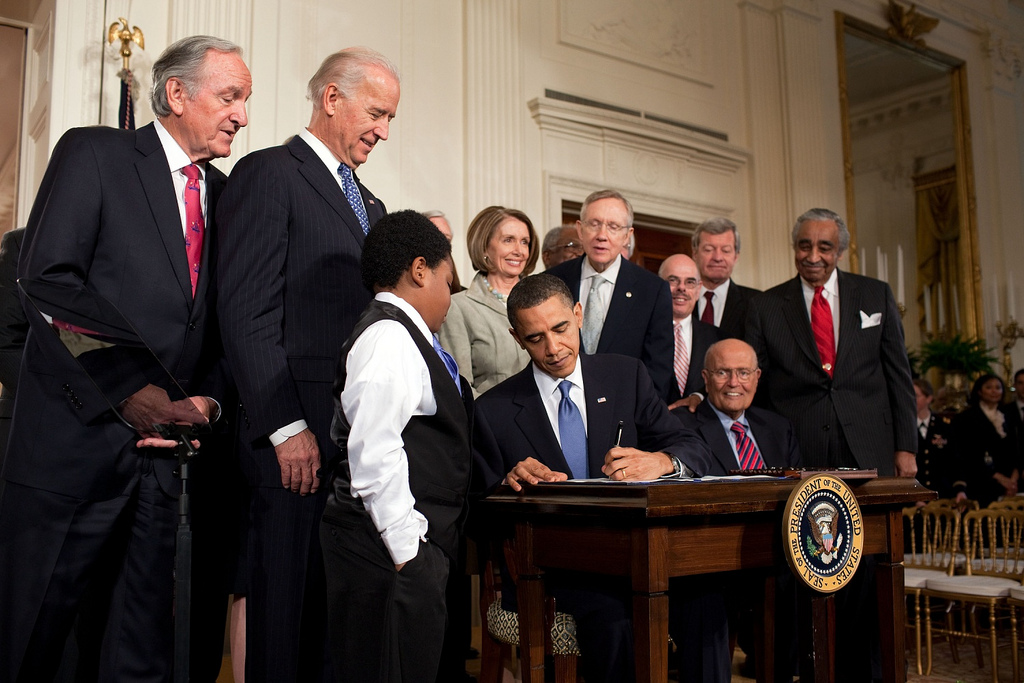


In December 2012 I testified before the House Energy and Commerce Committee as Pennsylvania’s secretary of human services and delivered an unvarnished message. The Affordable Care Act was a fiscal and administrative catastrophe in slow motion. Its mandates were crushing, its deadlines pure fantasy, its cost estimates deliberate fiction, and its promise of permanent 100 percent and later 90 percent federal funding rested on the fantasy of endless Washington surpluses that never existed. I warned that states would be forced to spend hundreds of millions just to comply with the non-expansion requirements, that Medicaid would devour every other budget priority, and that the enhanced federal match was nothing more than a teaser rate.
States begged in 2012 for flexibility, block grants, broad waivers, and genuine partnership. We were told top-down central planning would work better.
Fifteen years later Washington is once again wrestling with a full-blown health-care crisis. Hospitals are closing, premiums are rising at double-digit rates, physician shortages have reached historic levels, emergency rooms remain in permanent boarding status, half of rural hospitals are losing money, Democrats are renewing calls for single-payer, and Republicans are searching for something bold yet politically survivable. Against that backdrop every major warning I sounded in 2012 has come true, and most have proved worse than I feared.
The money first. I told Congress Pennsylvania would need more than $260 million in state funds in the first two fiscal years simply to meet the dozens of new IT, eligibility, provider-screening, billing-edit, and data-hub mandates unrelated to expansion. The final tab for Pennsylvania alone topped half a billion state dollars. Across the 50 states the non-expansion compliance bill exceeded $100 billion, a figure the original Congressional Budget Office scores simply pretended would not exist.
Enrollment exploded beyond any model. I projected roughly one million new Medicaid enrollees in Pennsylvania and a post-expansion program covering more than 25 percent of our citizens. Today 3.6 million Pennsylvanians, almost 28 percent of the state, are on Medicaid or CHIP, and the program now consumes roughly 40 percent of the state-funded budget. Higher education, infrastructure, pensions, public safety, and virtually every other priority have been starved for years to keep the Medicaid beast fed. The identical pattern repeated in nearly every expansion state.
I called the 90 percent match unsustainable. With the national debt now past $36 trillion and annual deficits still running above $1.5 trillion, every bipartisan fiscal commission and every state budget office quietly assumes the enhanced match will be slashed or eliminated in the 2030s. The only open question is how brutal the reckoning will be.
The insurance exchanges have fully vindicated Governor Corbett’s 2012 decision to stay away. Pennsylvania and most states remain on the federal platform because the promised state-based authority was always illusory. The handful of surviving state exchanges live on broad taxes against all insurance policies or perpetual federal life support.
Hospital Disproportionate Share (DSH) payment cuts were premised on the fantasy of universal coverage. Congress has delayed them seven separate times, yet the lingering threat has helped drive waves of rural and safety-net hospitals to close labor-and-delivery units or shut their doors entirely. Those closures have contributed directly to the maternity-care deserts and broader access crisis dominating headlines today.
The temporary primary-care payment bump that expired in 2014 became permanent because no legislature could face the backlash of cutting doctor rates. A short-term federal gift turned into tens of billions in permanent state obligations.
The labor-market distortion I flagged in 2012 never reversed. Businesses locked in the shift to part-time work to avoid the employer mandate, and a decade of peer-reviewed studies has confirmed the ACA pushed hundreds of thousands more Americans onto Medicaid than the rosy enrollment models ever admitted.
As policymakers in 2025 argue over how to rescue a health system staggering under 10 to 20 percent annual premium increases, record emergency-room boarding times, and a primary-care workforce on the verge of collapse, the ACA’s legacy is impossible to escape. It delivered neither affordability nor stability. It simply transferred enormous costs to state taxpayers, distorted labor markets, and created an entitlement so large and politically radioactive that no one dares reform it, even as the bills come due and the federal trust funds hurtle toward insolvency.
States begged in 2012 for flexibility, block grants, broad waivers, and genuine partnership. We were told top-down central planning would work better. The crisis unfolding today is the direct, predictable result of that arrogance.
The Affordable Care Act was sold as the final solution to America’s health-care problems. Fifteen years later it looks more like the opening act of an unaffordable tragedy whose next scene both parties are terrified to write.
READ MORE from Gary D. Alexander:
The Bureaucracy Has Become the Mission
Reclaiming America’s Graduate Pipeline
Gary D. Alexander served as secretary of health and human services in Rhode Island and Pennsylvania.




















