
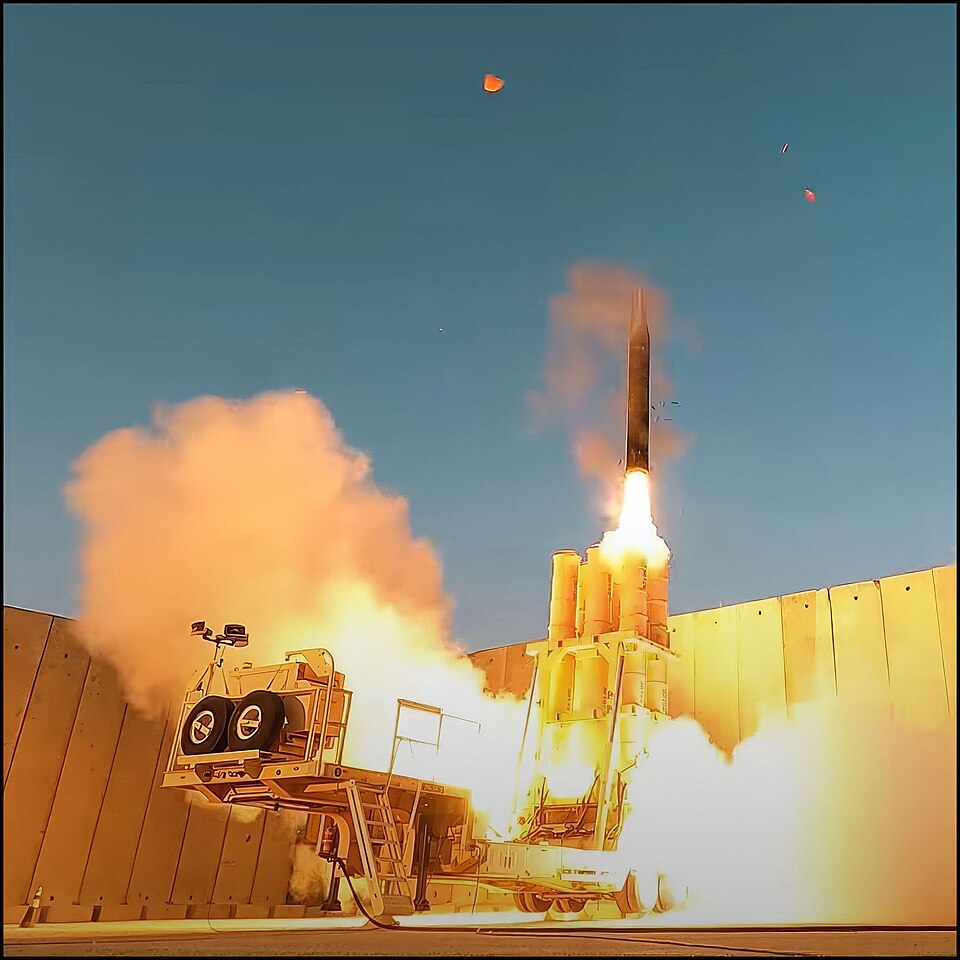


At 10 PM on Sunday, early warning detection systems went off across northern Israel, alerting of incoming Iranian missiles. Ten minutes later, residents in the Golan, Galilee, and Haifa scrambled for shelter as Israeli interceptors raced across the night sky to meet the incoming missiles. The initial ten-missile salvo was the first Iranian attack on Israel since the April ceasefire.
After two back-to-back barrages, the end-of-threat warning was issued just before 11 PM, and northern residents emerged from their shelters to find that the government had already issued school closures and limited gatherings across the country for the following day. All missiles were intercepted or fell in open areas with no damage or casualties.
Lingering on everyone’s mind was whether this would throw the region back into full-scale war. Israeli officials had already vowed a harsh response before the night was over. Israeli National Security Minister Itamar Ben Gvir posted that “Tonight, Tehran will burn,” while the IDF Chief of Staff stated that “the IDF will strike the enemy with determination as soon as orders are given.”
The Iranian missile attack was in response to Israeli strikes carried out against Hezbollah’s headquarters earlier on Sunday in Beirut’s Dahiyeh neighborhood. The Hezbollah terrorist group in Lebanon is funded, armed, and sponsored by the Islamist regime in Tehran, and the Lebanese front is integrally tied to the current U.S.-Iranian peace negotiations. (RELATED: Israel and Lebanon Agree to Conditional Ceasefire as U.S.–Iran Negotiations Loom)
Hezbollah renewed attacks against Israel in solidarity with Iran in late February after joint U.S.-Israeli strikes in Iran ignited a month-long regional war. Confronting the Hezbollah problem became a coequal front alongside Israel’s war on Iran throughout March. Several Israeli Defense Force (IDF) ground divisions advanced into southern Lebanon to methodically uproot Hezbollah militants and infrastructure, village by village, within a six-mile range of Israel’s northern border.
The ceasefire between Israel and Hezbollah announced by US President Trump on April 16 — as part of the regional ceasefire package with Iran — all but collapsed within days. The quick resumption of fighting reflects the new post-Oct. 7 ceasefire status quo, where fighting continues as justified responses to alleged violations committed by the other side.
Despite the paper ceasefire in effect, Hezbollah continued attacks against communities in the Golan and upper Galilee over the past month, prompting the IDF to cross the Litani River on May 29 in an unprecedented northern advance and establish operational control of the strategic Beaufort Ridge.
Tehran has insisted that it will only agree to a comprehensive peace deal with Washington if the hostilities between Israel and Hezbollah are included in the negotiations. Tehran’s demands are the lifting of U.S. and international sanctions, full Iranian control of the Strait of Hormuz, the release of billions of dollars of frozen assets, and a full withdrawal of Israeli troops from Lebanon.
The Lebanese contingent complicates the peace deal. Israel will not withdraw from Lebanon without the complete dismantling of Hezbollah’s military capabilities and a full removal of Hezbollah lawmakers from the parliament in Beirut — an objective that both the United Nations and the Lebanese government have failed to accomplish over several decades. Iran’s demand for an Israeli withdrawal from Lebanon, on the other hand, will allow its proxy terrorist group to remain active and live to fight another day.
The Israeli strikes against Hezbollah’s headquarters in Beirut on Sunday morning crossed a red line for Tehran and triggered the retaliatory missile attack on northern Israel later that night. Sunday night’s missile barrage was a “warning” to all U.S. and Israeli targets in the region of further attacks if “aggression” against Hezbollah in Lebanon continues, Iran’s Islamic Revolutionary Guard Corps stated.
The IDF responded to Iran’s Sunday night attack with air strikes on military targets, air defense systems, drone facilities, and a petrochemical plant inside Iran. On Monday, around 6 AM, the Iranian-backed Houthis in Yemen joined the fray in solidarity with the “Unity of the Fronts” between Lebanon, Gaza, Yemen, and Iran, by firing missiles at Tel Aviv. The Houthis also announced that a ban on all Israeli shipping in the Red Sea was in effect. Iran launched additional missile barrages at Israel on Monday morning, damaging houses in the West Bank, with no injuries.
Rather than condemn Iran’s blatant ceasefire violation, President Trump demanded that Israel not pursue retaliation. “The Iranian strike didn’t hurt anybody. Hopefully, Israel is not going to retaliate,” Trump told Israel’s Channel 12 news. “Each of them had their fun. Israel had its strike and Iran had its strike. We don’t need another one.” Trump stressed that his negotiation team is “very close to a final deal with Iran” and didn’t want a new missile war to impede the progress.
This also comes after reports last week of harsh words and profanity exchanged between Trump and Israeli Prime Minister Netanyahu, as Trump told the Israeli prime minister that there “would be no Israel without Me.” “I call the shots. I call all the shots. He [Netanyahu] doesn’t call the shots,” Trump told the Financial Times.
And here lies the problem. The point of going to war should be to swiftly defeat your enemy, dismantle their offensive capabilities, and achieve full victory to ensure a lasting peace. Trump’s popularity in Israel is in jeopardy because his “shots” are often the sole hindrance to full victory. His brokered ceasefires with Israel’s terrorist enemies have lenient stipulations, lack accountability or enforcement, and are prone to unhindered violations, as experienced in Lebanon over the past month and with Iran’s missile attack on Sunday night. Washington’s current negotiations with the Iranian terrorist regime ring of appeasement. Every day that Iranian officials sit at the table to negotiate their demands and advocate for Hezbollah, they are also buying time to restock their arsenals and air defenses through back-door Russian and Chinese channels, reposition missile launchers, and resupply foreign proxies.
Although Sunday night’s attack was unexpected, it was certainly no surprise. As long as the current regime remains in power in Tehran, with the desire and ability to launch offensive long-range missiles at Israel and sponsor terrorist proxies, the war is not over because the enemy is not defeated.
READ MORE from Bennett Tucker:
Iranian Missiles Challenge Israel’s Defense Systems
Image licensed under Attribution-ShareAlike 4.0 International.




















